Search This Blog

Tuesday, August 8, 2017

Trading Life for Death—Heroin v. Humanity by Brittany Duhon-Leblanc


Introduction
Imagine coming home early from work one afternoon to find a family member on the kitchen floor in a nearly cationic state. Their breath is coming in scanty gasps, lips, and finger tips are blue. They are a pale and their pulse is shallow. Emergency response is called and they soon discover their family member has overdosed on heroin. As they watch the flashing lights drive away with their loved one, they ask themselves how this could happen to them.
Tragically, it happens too frequently in countless homes around the United States.
In 2015, 1.90 % of teens twelve and older, 1.80 % of adults eighteen to twenty-five, and 2.10 % of adults twenty-six and older are life-time users of heroin (Heroin). Also, .50 % eighth graders, .60 % of tenth graders and .70 % of twelfth graders report habitual use (1). In addition, three out of every four people that use heroin report using prescription pain medication before trying heroin (“The Numbers Behind”).
History
It is important to identify where heroin came from and how it made its way into the United Sates and into American homes. Heroin is a synthesized, chemically enhanced form of opioid. Opioids are used in an important class of medicine to control pain that include natural opiates such as morphine and codeine and semi-synthetic opiates like oxycodone, hydrocodone, and hydromorphone (Galanie, Stephanie). These medications are derived from opium found in poppy plants. Opium and the other synthetic drugs that have come from it have been used since the 1800’s (Heroin Overview: Origin and History Methoide). The drug is cultivated from the sap of poppy plants, and its growth can be dated back to ancient Egypt civilization (1).
As earlier stated, opium has been grown since the common era (Opium Throughout History). It started in Mesopotamia in 3400 BC, and spread to Egypt, Europe, India and China by 400 AC (1). Opium was most frequently used as a cure-all drug for illnesses as mundane as a cold to more critical issues such as cancer, and childbirth (Heroin Overview). Physicians treating patients with opium-based medications were not aware of its highly addictive nature (Positive Sobriety Institute). During the civil war, soldiers were given morphine and during treatment addiction grew substantially for the United States (History of Heroin) To combat the rising epidemic of morphine addiction a physician in Germany, in 1874, was the first to successfully synthesize heroin; which ironically was derived from morphine (1). Soon after, the drug was imported to the United Sates and staked its claim over the people that lived there.
Social Effects
It is important to discuss how pharmaceutical companies and physicians have on the production and distribution of opiates that leads to heroin addiction. Drug smuggling occurs at the United States borders and the people’s very own nation is an accomplice. Reports in the media illustrate corruption with physicians. Fox News reports that in Philadelphia doctors were accused of selling controlled substances to drug dealers for profit (3 Doctors Accused). The Diversion Control Division has reported numerous cases of corruption. Two such cases include, DUBRULE, Rosaire Michel, MD of Tiptonville, Tennessee convicted in 2014 for distribution of controlled substances and ILEM, Priscilla, MD of Wayne, New Jersey convicted in 2012 for distribution of oxycodone (Cases Against Doctors). Pharmaceutical companies provide the medications the doctors sell either legally or illegally to patients. A Harvard University article illustrates inappropriate relationships between Big Pharma and their affiliates. Drug companies fund and supervise clinical trials of medications, which creates bias on trial design, outcomes, and reports (Safra). The income of pharmaceutical executives rises as prescription drug sales increase whether the sales are legitimate or illicit (1). Furthermore, drug firms fund research and development of new drugs, and they fund important medical activities such as continuing medical education, medical research, medical journals, and professional medical societies again creating bias (1).
 In some cases, victims of accidents, war, and crimes are prescribed these drugs without much thought. The patient with a broken limb is sitting with a doctor and is given drugs to help with pain. However, during the conversation the physician may not go over its addictive nature. On the bottles there are warning labels, but subjects seldom hear information regarding addiction from the physician. If there is evidence that proves prescription pain medication can often lead to heroin use, one may assume it is a doctor’s duty to disclose such information.
Furthermore, heroin has consequences that society may fail to recognize. As illustrated in this article found on the National Institute on Drug Abuse webpage, “social consequences of drug use, such as hepatitis, HIV/AIDS, fetal effects, crime, violence, and disruptions in family, workplace, and educational environments, have a devastating impact on society and cost billions of dollars each year” (Letter From the Director). Medical treatment of diseases that are spread through shared needles is an estimated $535 million in direct medical costs (Injection Safety). Death rate from these diseases are an estimated $1.3 million a year. Hepatitis B virus is highly infectious and globally effects 21.7 million people, Hepatitis C virus effects two million, and two percent of new HIV cases each year (1). 
What often follows addiction is crime and violence. Users of illicit drugs are rarely coherent and make ill-fated choices. The crimes that couple with addiction are possession of narcotics, theft directly related to drug use, and lifestyle such as gang related crime (Principles of Drug Abuse Treatment for Criminal Justice Populations - A Research-Based Guide). Unfortunately, statistics show that abuse of narcotics such as heroin is not limited to adults. According to the NIH, “As many as two-thirds of detained juveniles may have a substance use disorder (SUD)” (1). The take-away from that statement is not the number of juveniles detained, but children under the age of eighteen have a substance abuse disorder.
Examples
No doubt the nation is effected, but what about the average citizen, how does it resonate there? According to a medical director in Florida the current wave of heroin addiction “is because we are consuming ninety-eight percent of the world’s Oxycodone supply, prescribing enough for every man, woman, and child to have a thirty-day bottle of it … then we started cracking down on the pill mills and they had to go somewhere” (America's New Heroin Addicts). The same medical director injures his foot climbing to his roof and subsequently has surgery on his foot. He is prescribed oxycodone for the pain. The substance has such a profound effect on his mind that soon he injects himself with fentanyl in the operating room (1). In other words, a person can do routine work around the house, injure their foot, have surgery, and end up with a drug problem.  
Equally important, is the substantial impact opiates have on the brain. Understanding how the drug works in the body can help clarify the nature of addiction. The brain naturally makes its own chemicals, such as dopamine, adrenaline, or serotonin. These chemicals are passed through the nervous system through a network of neurons. The process in which this happens is precise, leaving no room for error. The brain does it perfectly. If the process is changed it can cause severe consequences such as chemical imbalances. Examples include depression, bi-polar disorder, and anxiety. When opioids are introduced to the body, they not only disrupt the process, but they take over entirely. The neurons in the brain are designed to fire and send messages though the body to indicate pain or pleasure. While generous amounts of chemicals are supplied, only what is needed is used and the rest is recycled and the sensations fade. Opioids inhibit the recycling system. In turn, the feel-good sensations given off by the body’s normal chemical structure is long-lasting. The production of chemicals changes when opioids are used for long periods of time, therefore, when a person tries to stop, withdrawal occurs.
Ultimately, addicts are crippled by the effects of heroin and in 2015, an astonishing 10,574 deaths occurred from overdose (America's New Heroin Addicts). Users quickly build a tolerance to heroin resulting in many fatal and non-fatal overdoses. When a tolerance is built, the addict will not be stimulated as before, and it causes withdrawal—this is painful and debilitating.  Withdrawal from any opioid include symptoms such as agitation, anxiety, muscle pain, nausea/vomiting, insomnia, diarrhea, sweating and abdominal pain (Opiate and opioid withdrawal). It is a small wonder that people using find it impossible to quit.  
Solutions
            The solutions scholars have created are somewhat contradictory, but scientifically speaking are worthy efforts. The first treatment is methadone. It is a synthetic, narcotic analgesic (pain reliever) that has many of the same characteristics as morphine (Methadone CESAR). Ironically, it was manufactured in Germany as a less addictive substitute for Morphine (1). Side effects of methadone include: restlessness, vomiting/nausea, slowed breathing, constipation, severe sweating, lung and respiration problems, sexual dysfunction, and death (1). It can cause serious or life-threatening breathing problems during the first forty-eight to seventy-two hours, which is why its use must be monitored by a physician and tailored for each patient (Methadone). Treatment with methadone changes the way the brain processes pain and blocks the euphoric effects of opiates (Walsh). However, addiction to methadone is still a possibility, as well as withdrawal. When using it as treatment, patients must remain on it for twelve months, but in some cases several years (Methadone CESAR).
            Another pill used for the treatment of addiction is suboxone, which is a combination of naloxone and buprenorphine. Naloxone is the drug used to bring people back from an overdose and buprenorphine is used to block opioid cravings (Painkiller Abuse Treated by Sustained Buprenorphine/Naloxone). With both methadone and suboxone treatments, heroin use dropped up to forty-nine percent in some cases, but once treatment ceased, patients would relapse (1).  While these drugs are helpful, the addict is still dependent on prescription medications for lengthy periods of time.
            Is it too far a reach to assume addicts who are addicted would like to be free from the use of all substances and live a fulfilling life? Any freedom from heroin addiction is desired of course, but there is another solution that encourages complete abstinence from all mood or mind-altering substances. The solution is not medical, but spiritual in nature and focuses on an unseen three-tier malady some addicts have—sickness of the mind, body and spirit. The method is not found in expensive counseling sessions, although such sessions are not discouraged, it is found in an anonymous society known as Narcotics Anonymous (NA). The group was formed from another private society whose common name is Alcoholics Anonymous (AA). Both organizations provide a twelve step program built on camaraderie that is formed from a common bond shared by people who have been through the worst parts of addiction. The program promotes abstinence from all drugs and twelve steps to help addicts work through their past, present and future.
Often, people who attend NA meetings can stop using and feel nearly immediate relief from the burdens of addiction. The length of abstinence is directly related to attendance, involvement, and the desire to stop. Here is a short description illustrated by the National Center of Biotechnology Information, “people that attended meetings, considered themselves a member, work steps and have regular attendance achieve sustained abstinence over one year” (Krentzman, et al). If the behavior continues with frequent attendance people can achieve three or more years (1). “Across recovery stages, individuals were 4.1 to 8.6 times more likely to achieve sustained abstinence by continuous 12-Step meeting attendance and involvement” (1).  AA and NA provide a long lasting support system and answers to ailments not directly related to their acute disease. They are able to offer sufficient council because they have first-hand experience in addiction and recovery. While soboxone and methadone treat what may be perceived as the root cause of addiction, NA and AA treat the malady that drives an addict to use in the first place. Thus, potentially eradicating the problem all together.


Camus
            Albert Camus was a peaceful rebel who shares his odd views of the world though literature. He believes there is no purpose to life, and those who try to make sense of its secret meaning though the concept of God or transcendence are committing a philosophical suicide (The Ruged Pyrrhus). He also believes those who commit physical suicide are people who try to find meaning and fail (1). Camus would probably view this heroin epidemic as people struggling again to make sense of the world and how it is meaningful to them. He may be absolutely right. Some addicts may have a handicap that causes them to feel eternally unique and unable to identify with others around them. It is possible that the separation they feel would be enough for a person to have a desire to escape reality by way of illicit drug use. It would make sense then, if it were true, why NA and AA would work better than prescription medicine. However, it may be equally as easy to draw the conclusion that drugs, although branded as prescriptions, will ultimately fix a drug problem.
Conclusion
            In 2015, fifty million Americans report suffering from chronic pain (“NIH Study Shows Prevalence”). It is impossible to know who could be effected by the heroin epidemic because opiates are frequently prescribed to treat pain in all stages and three of every four people report using prescription pain medications before trying heroin (“The Numbers Behind”). The epidemic is not biased against age, race, or social class, but people may not understand the devastation the disease can bring to their life until it is their loved one on the kitchen floor.


Works Cited
 “3 Doctors Accused of Selling $5M in Prescription Drugs.” Fox News, FOX News Network, 12 May 2016, www.foxnews.com/health/2016/05/12/3-doctors-accused-selling-5m-in-prescription-drugs.html. Accessed 25 July 2017.
“America's New Heroin Addicts - BBC News.” YouTube, YouTube, 16 Nov. 2016, www.youtube.com/watch?v=zeU2tDRTlMM. Accessed 22 July 2017.
“Cases Against Doctors.” Resources - Cases Against Doctors, www.deadiversion.usdoj.gov/crim_admin_actions/index.html. Accessed 25 July 2017
 Galanie, Stephanie, et al. “Complete Biosynthesis of Opioids in Yeast.” Science (New York, N.Y.), U.S. National Library of Medicine, 4 Sept. 2015, www.ncbi.nlm.nih.gov/pmc/articles/PMC4924617/. Accessed 25 July 2017.
 “Heroin.” NIDA, 27 May 2016, www.drugabuse.gov/drugs-abuse/heroin. Accessed 18 July 2017.
“Heroin Overview: Origin and History | Methoide.” MethOIDE - methamphetamine and other illicit drug education, methoide.fcm.arizona.edu/infocenter/index.cfm?stid=174. Accessed 18 July 2017.
“History of Heroin.” Narconon International, www.narconon.org/drug-information/heroin-history.html. Accessed 19 July 2017.
“Injection Safety.” WHO Western Pacific Region, WPRO | WHO Western Pacific Region, 3 Feb. 2012, www.wpro.who.int/mediacentre/factsheets/fs_20120204/en/. Accessed 22 July 2017.
Krentzman, Amy R., et al. “How Alcoholics Anonymous (AA) and Narcotics Anonymous (NA) Work: Cross-Disciplinary Perspectives.” Alcoholism Treatment Quarterly, U.S. National Library of Medicine, Dec. 2010, www.ncbi.nlm.nih.gov/pmc/articles/PMC3140338/.
“Letter From the Director.” NIDA, www.drugabuse.gov/publications/research-reports/heroin/letter-director. Accessed 22 July 2017.
 “Methadone.” MedlinePlus Drug Information, medlineplus.gov/druginfo/meds/a682134.html. Accessed 30 July 2017.
Methadone CESAR, cesar.umd.edu/cesar/drugs/methadone.asp. Accessed 30 July 2017.
“NIH Study Shows Prevalence of Chronic or Severe Pain in U.S. Adults.” American Pain Society, 18 Aug. 2015, americanpainsociety.org/about-us/press-room/nih-study-shows-prevalence-of-chronic-or-severe-pain-in-u-s-adults.
“Opiate and opioid withdrawal.” MedlinePlus Medical Encyclopedia, medlineplus.gov/ency/article/000949.htm. Accessed 24 July 2017.
“Opium Throughout History.” PBS, Public Broadcasting Service, www.pbs.org/wgbh/pages/frontline/shows/heroin/etc/history.html. Accessed 19 July 2017.
“Painkiller Abuse Treated by Sustained Buprenorphine/Naloxone.” National Institutes of Health, U.S. Department of Health and Human Services, 27 July 2015, www.nih.gov/news-events/news-releases/painkiller-abuse-treated-sustained-buprenorphine/naloxone. Accessed 30 July 2017.
“Positive Sobriety Institute.” Heroin's History | From the Birth of Heroin to Today, heroin.net/about/a-brief-history-of-heroin/. Accessed 19 July 2017
“Principles of Drug Abuse Treatment for Criminal Justice Populations - A Research-Based Guide.” NIDA, www.drugabuse.gov/publications/principles-drug-abuse-treatment-criminal-justice-populations/introduction. Accessed 24 July 2017.
Safra, Edmond J. “The Pharmaceutical Industry, Institutional Corruption, and Public Health.” Harvard University Center for Ethics, ethics.harvard.edu/pharmaceutical-industry-institutional-corruption-and-public-health. Accessed 30 July 2017.
 “The Numbers Behind America’s Heroin Epidemic.” The New York Times, The New York Times, 30 Oct. 2015, www.nytimes.com/interactive/2015/10/30/us/31heroin-deaths.html. Accessed 18 July 2017.
The Ruged Pyrrhus. “Camus: The Absurd Hero.” YouTube, YouTube, 26 Jan. 2015, www.youtube.com/watch?v. Accessed 1 August 2017.
Walsh, Lynn. “Methadone” SAMHSA, 28 Sept. 2015, www.samhsa.gov/medication-assisted-treatment/treatment/methadone. Accessed 30 July 2017.


Thursday, August 3, 2017

Road Rage- Allison Warren


Road Rage

Imagine yourself driving in a car on the way to the movie theater with your best friends. You are all jamming to music and laughing with huge smiles across your faces. You grab your phone to change the song. As you’re looking down at the music app, you accidentally swerve into the lane next to yours. You quickly turn the steering wheel back to stay on course. You set your phone down to focus better. You and your friends are shaken up from this careless mistake. The car next to you honks it horn and pulls up next to your car and starts yelling explicit words. You hold up your hand to relay an “I’m sorry” gesture, but he is still yelling at you and your friends. You exit the freeway to pull into the movie theater. That’s when the same guy pulls up next to you pointing a gun in your direction. That gun is the last thing you see before the world turns black.

            Road rage is “any unsafe driving behavior, performed deliberately and with ill intention or disregard for safety, can constitute aggressive driving” (AAA Exchange). Road rage is becoming more relevant in today’s society. “Recent reports indicate incidents of aggressive driving have risen 51% since 1990 (“Measuring Road Rage: Development of the Propensity for Angry Driving Scale”). Not only do simple mistakes, like the example mentioned, elicit road rage, but also many other reasons do as well. Other reasons might be, texting and driving, driving under the influence, failure to pay attention to road signs, and the congestion of traffic.  Road rage is a growing problem that risks the safety of everyone on the road. “Road rage incidents are increasing both as a rate per 100,000 residents and per 100,000 registered vehicles” (Faulks). Victims of road rage have gotten their cars damaged, their lives threatened, and some have even died. With road rage incidents escalating, solutions to these situations are crucial, not only to better the roads, but to make them safer for all.

Road rage is a relatively new rising problem. Road rage started becoming an eye-opener during the 1990’s. “Back in 1990, the AAA Foundation for Traffic Safety conducted a study of over 10,000 traffic accidents linked to driver violence” (“Road Rage Statistics Filled With Surprising Facts”). Road rage has steadily increased since the 1990’s and will continue to grow with more people learning how to drive. “Previous research by the AAA Foundation found that from 2003 to 2007, over half of fatal crashes involved at least one driver who performed a potentially aggressive action” (“AAA Exchange”). More people are getting their license and are becoming an active driver on the road. From 1990, “the number of people with a driver’s license in the United States grew from around 167 million to about 218 million in 2015 (Laporte). With more drivers on the road, the opportunity for road rage to cause an accident is higher than ever.
Recently, more drivers are purposefully engaging in road rage activities to entice other drivers, like poking a bear. According to the AAA, “Over 104 million drivers purposefully tailgate” (“Nearly 80 Percent of Drivers Express Significant Anger, Aggression or Road Rage”). Road rage is a very dangerous action a driver can have towards another driver. Not only does a person put others at risk for an accident or death to occur, but they expose themselves to those risks as well: “male drivers were more than three times as likely… to have gotten out of a vehicle to confront another driver or rammed another vehicle on purpose” (1). 
Although the history of road rage is comparatively new, the actions of those experiencing road rage are reasonably the same as today as they were in the 1990’s. There are many reasons why people get road rage: “many common behaviors, including racing, tailgating, failing to observe signs and regulations, and seeking confrontations with other drivers” are examples of what evokes road rage (“Aggressive Driving”). Road rage should be taken very seriously because it has taken many lives and injured many more over the years.

            Road rage affects everyone affiliated within the incident. The two drivers are not the only people involved in a road rage event. The families and communities of the drivers are just as involved as the drivers are. If a person dies in an accident, the family of the deceased is devastated and the community grieves for them. Road rage affects a person in a way where they might not ever be the same.
Road rage is now considered a psychological mental condition. Road rage can  be described as:
Intermittent explosive disorder… Intermittent explosive disorder involves multiple outbursts that are way out of proportion to the situation. These angry outbursts often include threats or aggressive actions and property damage. The disorder typically first appears in adolescence; in the study, the average age of onset was 14. (“‘Road Rage’ Gets a Medical Diagnosis”)
Road rage can affect people to such a severity that it can render their function. “People with IED over-personalize every interaction, and then over-react with immediate aggression” (Kirchner). With people over personalizing events associated with road rage, their judgment tends to become distorted or clouded, and the situation gets even more intense. This may make the risk of injury or death even more prevalent.
            Road rage has affected millions of people in the nation. Road rage is a constant growing issue in the United States, that not only injures millions, but also kills thousands as well. “There were at least 620 gun-involved road rage incidents in 2016; that’s more than double from two years earlier. Florida had the most in the country over a two-year period, with 146 incidents” (“Study: Road Rage Incidents Involving Guns Are Increasing”). Road rage has evolved from “simple” shouting, flicking others off, and bumping cars, to something more alarming- shooting people to purposefully kill. What the most disturbing thing is about an instance like this, is that it can happen any time to anyone- to you, to your mom, or to a random stranger. Either way, shootings during road rage incidents are becoming more frequent. “All told, there were at least 1,319 road rage episodes involving firearms… Nationwide, at least 354 people were wounded and 136 people were killed” (“Road Rage Shootings Surge on America's Highways and Byways”).
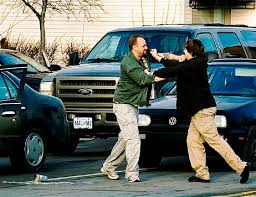
            Globally, road rage is a topic of concern. More people are showing signs of aggression towards each other while driving: “worldwide, more than two million fatalities occur yearly” (James). With rising death tolls, road rage is tipping the worldwide scale of safety on the roads. But, road rage is not just confined to cars. Road rage can happen on any type of vehicle such as: boats, bicycles, skateboards, or off-road vehicles. Internationally, road rage is expanding into a force that has affected millions of people. With its many forms, road rage can occur during any situation and claim the lives of many.Road Rage With Biker Video 
Whether road rage is common personally, nationally, or globally, it has a similar outcome in any of these situations. With people developing serious road rage, they are appropriating a mental condition. Intermittent explosive disorder, IED, can blow things out of proportion for agitated drivers. This has caused circumstances to become intensified and increases the risk of injury or death. Nationally, millions are affected and thousands of people have died from road rage events. The nation’s safety is declining, while the danger of road rage is growing substantially. Worldwide, road rage has developed into a major concern for most countries. Road rage has developed into a phenomenon that can happen with any vehicle, and can result in any serious outcome. People have even used weapons to demonstrate just how indignant they are towards the driver that caused them to get road rage.

            Road rage happens on almost every road in America. There have been horrible wrecks and injuries because of such incidents. Recently, an innocent three-year-old child was shot and killed by a man who had road rage. “The man started honking his horn. The grandmother honked her horn. Then, police said, the man got out of his black Chevrolet Impala and fired into her car” (Ansari). He got angry from the grandmother “not moving quickly enough at a stop sign,” and so he got out and shot a gun into the car (1). Not only was there a grandmother and a toddler in the vehicle, but also a one-year-old baby. It is such a tragedy that a toddler’s life was taken from such rash actions. He will not get a chance to experience life because of the road rage that caused the man to pull a gun on the family in the car. The police have not found the suspect yet, but they have an investigation opened. Hopefully justice will be served.
            Road rage also claimed the life of an eighteen-year-old girl, who just graduated high school. The girl allegedly “jockeyed for position on a two-lane West Goshen road that merges into one lane,” and the killer, David Desper, became overwhelmed with road rage (“Pennsylvania Road Rage Killing: Man, 28, Charged with Murder in Teen's Death”). He pulled out a “.40-caliber Smith & Wesson semi-automatic,” and brutally shot and killed the young girl (1). She “was shot in the head
and died instantly. Her car veered off the road and was later found in a ditch. The shooter fled, driving partly along the shoulder of the highway until exiting the road” (1). He took her life because he got angry with the way she merged into his lane. Road rage is an inexcusable and unacceptable reason to take someone’s life. “She was headed to Jacksonville University in Florida in the fall,” but now she won’t ever get the chance to go to her dream school (1). David Desper “was charged with first degree murder in the death of 18-year-old Bianca Roberson after turning himself in to police” (1).
As aforementioned, road rage can happen in any type of vehicle, like a bicycle. A seventeen-year-old girl, Nabra, was assaulted many times by a man in car because of a road rage incident. She was riding her bicycle in the street and the driver of the car did not like that she was in his way. Darwin A. Martinez Torres, 22:
Caught Nabra and struck her with the bat…Detectives said he then drove her to another location and assaulted her again. Her body was found in a man-made pond a few miles from the parking lot. An autopsy found that Nabra suffered blunt-force trauma to her upper body. (Wamsley)
She was a Muslim and many believe that her death was a hate crime. Nabra’s father said, following the death of his child, "Why was he running behind the kids wearing Islamic clothes with a baseball stick? Why, when my daughter fell down, why did he hit her?...We don't know this guy…We don't hate anybody because of religion or color” (1). Although police deny any hate caused this horrible situation, people are not backing down from bringing awareness to this story. “Darwin A. Martinez Torres…has been charged with murder” (1).
            Road rage is a growing epidemic in today’s society. With many being killed and many more being injured, attention to this issue needs to be sought. Whether road rage is a precipitous feeling or an existing mental condition, no justification is worthy of killing an innocent life. The government should become more involved, and demand new laws to be followed. As well as, psychologists revoke or invalidate people’s license if they have a severe mental condition of road rage. Too many lives have perished for such a growing issue to not require solutions.

            Road rage urgently needs solutions to help stop or slow down the rate of accidents. The solutions used would be a psychological evaluation before receiving a license and when renewing a license, as well as, making road rage provoked accidents illegal. According to a survey from the AAA, “Nearly 8 of every 10 U.S. drivers admit expressing anger, aggression or road rage at least once in the previous year” (Lowy). With this many people experiencing such a perilous mind set in a driving setting, solutions need to be addressed.
            When receiving your license, you are agreeing to follow all the rules and laws of the road. Although road rage is not officially a law, a driver should not experience road rage strong enough to hurt others. There are “10 million” people with IED (“Intermittent Explosive Disorder”). With IED being recognized as a mental condition, drivers should be evaluated and tested for it. With having a psychological assessment, drivers with an unknown IED condition can be spotted out and revoked from having a license. Also when renewing your license, an evaluation should be conducted as well to reconfirm you are a safe driver or to discover you have developed IED through your years of driving.
DMV’s are already filled with appointments and walk-ins, so having an evaluation for every driver in there will take time they presumably do not have. A psychological “in-depth test…may take 1 to 2 hours” to complete ("Mental Health Assessment"). “The average American will wait 44 minutes before receiving service at the DMV” (“DMV Study: Why Some States Have Longer Wait
Times at the DMV”) (Attachment 1). With adding a longer process for a person to go through, the wait time will increase even more so. Also, the DMV may not have enough funds to add more employees than necessarily needed. “The average salary of a DMV employee is $35,000” ("DMV Worker: Salary"). A DMV worker does not earn much yearly and adding professional psychologists that “make around $74,000” each, will make funding for the DMV more strained (Psychologist Salary). In total, DMV’s “cost $13.8 billion a year” and so saving money is vital for their productivity ("Billions of Dollars Lost Each Year Over Trips to the DMV"). In the state of Texas alone, there are 225 DMV’s which would cost $49,950,000 yearly for just three psychologists in all 225 DMV’s (“Find the Texas DMV Office Closest to You”). But if money was not an issue and enough psychologists were trained and ready to work in a DMV, then the solution would work.
Road rage involved accidents becoming illegal will not only help reduce them, but also reinforce that road rage will not stand. If police got more involved in road rage accidents, less people will interact with such actions. For example, if a police officer pulled over a driver for yelling at another car and showing inappropriate gestures when they were cut off, then the driver will know it is unacceptable to partake in road rage situations. But if a driver purposefully rams another car or gets
out of their car to beat the other driver up, then the police should arrest the individual eliciting the road rage incident. It should become a law if a person exhibits any road rage and endangers others while driving. The road rage angered driver should be held accountable and arrested for risking the safety of others. A bill was recently introduced in Hawaii to help aid in road rage situations. But “the bill doesn’t specify penalties” for breaking it (Zannes). They need to turn this bill nationwide and create a law from it with repercussions added to help minimize road rage activities.
            Although a new law would help road rage be recognizable, people will still break it despite it being a law. “Millions of people who declare themselves innocent law abiding citizens actually commit around seven crimes a week” ("How We All Break the Law Every Day"). An example of that would be common traffic laws like speeding. Many people break simple laws daily and so how can the police enforce a law when most people break them every day? There needs to be more police patrolling the roads and holding drivers responsible for their actions. “There are more than 900,000 sworn law enforcement officers now serving in the United States,” but the number should increase by 25 % to get 1,125,000 active police officers on the road (Law Enforcement Facts). If the US amped up its police involvement on the road, then road rage would happen less and more laws would be followed. 
            Evaluating drivers when receiving their license and when renewing their license for any indication of IED will help reduce accidents caused by road rage. But the better option would be if a law was set in place and police activity increased on the roads. Road rage needs to be slowed down if not stopped and increasing police patrolling and implementing a new law regarding consequences for road rage will help the roads become safer.
           Road rage can be considered absurd. To be absurd is to be “ridiculously unreasonable, unsound” ("Absurd"). Absurdities are found everywhere. But in literature, absurd fiction is a prominent area of study. Camus, an absurd fiction author, “believed life lacked purpose, yet human life was valuable” (Hammett). Camus’ beliefs lacked the passion for life and meaning. He did not care about the actions of people, but rather the value and truth of an individual. Camus relates to road rage because of his belief of life being valuable. Road rage results in a lot of injuries and death and Camus would feel dismayed about the people involved.  Road rage would confuse Camus because of the meaningful actions a road rage driver would purposefully do. Not only would Camus be shocked by the way people drive today, but how they are not being stopped when committing acts of violence. Road rage would seemingly go against his beliefs because of the drivers not valuing the lives of the drivers around them when expressing their road rage. Which in return, would make Camus want to change the effects of road rage or to bring awareness to the matter.

            Road rage is an epidemic that affects millions of drivers all over the world. “Over 104 million drivers purposefully” exhibit acts of road rage (“Nearly 80 Percent of Drivers Express Significant Anger, Aggression or Road Rage”). Road rage elicits abhorrent behavior that puts everyone on the road at risk for injuries or death. Road rage might cause a driver to overreact in a situation, or have
the driver develop IED. A psychological condition such as IED, is a serious complication regarding the safety of those on the road. If a person displays IED, a concern grows for the drivers around them. Road rage should be stopped or at least slowed down until a perpetual plan can be set in place to rid the roads of this epidemic. Too many accidents occur each day for a strategy to not be required. This being said, the solutions to optimize on are increasing police activity by 25% and establishing a new law to cut down on the number of road rage incidents that happen daily. The United States can save thousands of lives if they devise a plan of action. Road rage can and will be stopped.
            Now imagine this, you are driving in a car with your best friends. Jamming to music and rocking out, you sing at the top of your lungs. Laughter fills the car as you reach down and grab your phone to change the song. As you touch the screen, you accidentally swerve into the lane adjacent to yours. Quickly, you turn the steering wheel back into its proper position, fixing the careless mistake you just made. As you look over to the car driving beside you, they give you a small frown. You hold up your hand and say “I’m sorry,” to the frowning driver. He holds up his hand and mouths the words “It’s fine,” and then drives off. You and your friends go back to singing and laughing as you continue to drive.


Work’s Cited
“AAA Exchange.” Aggressive Driving, exchange.aaa.com/safety/driving-advice/aggressive
driving/#.WW4y7YQrLIU. Accessed 18 July 2017
"Absurd." Merriam-Webster. Merriam-Webster, n.d. Web. 26 July 2017.
“Aggressive Driving.” Aggressive Driving | AAA Foundation for Traffic Safety,
www.aaafoundation.org/aggressive-driving. Accessed 18 July 2017.
Ansari, Azadeh. “Toddler Killed in Arkansas Road Rage Incident; Manhunt Underway.” CNN,
Cable News Network, 19 Dec. 2016, www.cnn.com/2016/12/18/us/arkansas-toddler-
death-road-rage/index.html. Accessed 20 July 2017.
"Billions of Dollars Lost Each Year Over Trips to the DMV." DMV.com. N.p., n.d. Web. 01
Aug. 2017.
"DMV Worker: Salary." Shmoop. Shmoop University, 11 Nov. 2008. Web. 25 July 2017.
Faulks, Ian J. BULLYING, INTIMIDATION, ABUSE AND ASSAULT ON THE ROAD -
SELECTED AUSTRALASIAN RESEARCH AND COMMENT ON ‘ROAD RAGE’
AND AGGRESSIVE DRIVING.
www.researchgate.net/profile/Ian_Faulks/publication/273382341_Bullying_intimidationa
buse_and_assault_on_the_road_-_Selected_Australasian_research_and_comment_on_
'road_rage'_and_aggressive_driving/links/54ffdaaf0cf2672e2248d955/Bullyingintimidati
on-abuse-and-assault-on-the-road-Selected-Australasian-research-and-comment-on-roa
d-rage-and-aggressive-driving.pdf#page=207.

“Find the Texas DMV Office Closest to You.” TX - Texas DMV Locations,
www.safemotorist.com/Texas/DMV_Locations.aspx.
Hammett, Beth. "Introduction to Absurdity and Fiction." Top Hat. N.p., n.d. Web. 26 July 2017.
"How We All Break the Law Every Day." The Telegraph. Telegraph Media Group, 22 Sept.
2008. Web. 25 July 2017.
“Intermittent Explosive Disorder.” Gale Encyclopedia of Children's Health: Infancy through
Adolescence, Encyclopedia.com, www.encyclopedia.com/medicine/divisions
diagnostics-and-procedures/medicine/intermittent-explosive-disorder.
James*, Leon. “Road Rage: A Worldwide Public Health Crisis.” Journal of Psychology &
Clinical Psychiatry, MedCrave Online, 2 May 2016,
medcraveonline.com/JPCPY/JPCPY-05-00308.php. Accessed 19 July 2017
“Key Data about the Profession.” Law Enforcement Facts, NLEOMF,
www.nleomf.org/facts/enforcement/?referrer=https%3A%2F%2Fwww.google.com%2F.Kirchner, Lauren. “The Psychology and Biology of Road Rage.” Pacific Standard, 28 Jan. 2014,
psmag.com/social-justice/psychology-biology-road-rage-73416. Accessed 19 July 2017.
Laporte, John. “Topic: Car Drivers.” Www.statista.com, www.statista.com/topics/1197/car
drivers/. Accessed 24 July 2017.


Lowy, Joan. “Survey Finds Road Rage, Risky Driving Is on Rise.” Detroit Free Press, Detroit
Free Press, 14 July 2016, www.freep.com/story/news/nation/2016/07/14/most-drivers        admit-aggressive-behavior-road-rage/87070368/. Accessed 25 July 2017.
 Measuring Road Rage: Development of the Propensity
for Angry Driving Scale - ScienceDirect,
www.sciencedirect.com/science/article/pii/S0022437500000505#BIB17. Accessed 17
July 2017.
"Mental Health Assessment." WebMD. WebMD, n.d. Web. 01 Aug. 2017.
 “Nearly 80 Percent of Drivers Express Significant Anger, Aggression or Road Rage.” AAA
NewsRoom, 14 July 2016, newsroom.aaa.com/2016/07/nearly-80-percent-of-drivers-
express-significant-anger-aggression-or-road-rage/. Accessed 18 July 2017.
“Pennsylvania Road Rage Killing: Man, 28, Charged with Murder in Teen's Death.” Fox News,
FOX News Network, www.foxnews.com/us/2017/07/02/pennsylvania-road-rage-killing-
pickup-truck-recovered-in-slaying-teen.html. Accessed 20 July 2017
Psychologist Salary. N.p., n.d. Web. 01 Aug. 2017.
“‘Road Rage’ Gets a Medical Diagnosis.” NBCNews.com, NBCUniversal News Group, 5 June
2006, www.nbcnews.com/id/13152708/ns/health-mental_health/t/road-rage-gets
medical-diagnosis/#.WW9334QrLIU. Accessed 19 July 2017.

 “Road Rage Shootings Surge on America's Highways and Byways.” The Trace, 21 Apr. 2017,
www.thetrace.org/2017/04/road-rage-shootings-guns/. Accessed 19 July 2017.

“Road Rage Statistics Filled With Surprising Facts.” Elite Driving School, 8 Mar. 2015,
drivingschool.net/road-rage-statistics-filled-surprising-facts/. Accessed 18 July 2017.
“Study: Road Rage Incidents Involving Guns Are Increasing.” CBS News, CBS
Interactive, 10 Apr. 2017, www.cbsnews.com/news/study-road-rage-incidents-involving-
guns-are-increasing/. Accessed 19 July 2017.
Wamsley, Laurel. “Police Say Road Rage Led To Killing Of Muslim Girl In Virginia.” NPR,
NPR, 20 June 2017, www.npr.org/sections/thetwo-way/2017/06/20/533664159/police-
say-road-rage-led-to-murder-of-muslim-girl-in-virginia. Accessed 20 July 2017.
Zannes, Alexander. “New Bill Aims to Curb Road Rage by Outlawing Aggressive Acts on the
Road.” KHON2, 20 Aug. 2016, khon2.com/2


Junkie by Trisha Medeiros

The house is torn apart, ripped through, everything of value gone. The television is missing, the VCR, everything that could be pawned for cash. There is broken glass and ripped up paper strewn across the room from moments of rage that she has fallen into when the cravings are at their worst. She is laying curled up in the corner moaning, shaking, and sweating. It has been days since she has showered, and you see evidence of her being sick in a bucket at the bedside. She won’t see you watching from the crack in the door or hear your stomach rumble when you are hungry. You, in turn, would not dare disturb her when she is out of her supply, knowing that her rage could be directed at you. Every single day this is a reality for many of those who live with or love someone who is addicted to an opiate, specifically Heroin. These are not random people you see on the street. They are family members, mothers and fathers, sons and daughters. There is nothing quite so horrific as watching one you love struggle with drug abuse, there is nothing more hopeless than seeing them lose that battle time and again.
 Opiate use effects between 26.4 to 36 million people worldwide, of that number roughly 10 million are users of Heroin (“America’s Addiction to Opioids: Heroin and Prescription Drug Abuse”,1). In America, 2.1 million people are addicted to prescription, over the counter opiates. Eight out of ten drug related deaths are attributed to opiate use (1). Users of Opiates are the largest group of users in the rehabilitation community (1). With statistics such as this, one begins to wonder how abuse of painkillers has become such a prevalent presence in the world. Furthermore, how does one become addicted? How does this addiction impact society? Where did opiate addiction begin?
Opiates are derived from what is known as the Papaver Somniferum, or the opium poppy. The opium poppy is a flower that is grown in remote regions of the world by farmers on small plots of land. It is grown and cultivated in harsh climates, then sold and processed into what is known as Opium. The earliest documented record of opium use is around 3,400 B.C (“Cannabis, Coca, & Poppy: Nature’s Addictive Plants” 1). It’s use spread from Mesopotamia to Egypt, then the Silk Road to locations all over Asia, Africa, and Europe. Opium was discovered to have many uses and it has been widely revered as a painkiller, a laxative, and a cure for insomnia, amongst many others, which contributed to its recreational popularity. This drug was the basis for the Opium War between Britain and China; its use has stemmed conflict in nearly every country in which it has been used. Migration and immigration readily ensured the propagation of this drug worldwide. Opium dens sprang up throughout, becoming the new favorite pastime of Chinese and Americans alike. This continued until the Smoking Exclusion Act banned smoking, but not manufacturing of Opiates.  
A plethora of derivatives are sourced from Opium, including but not limited to codeine, heroin, oxycodone, and methadone. Due to the multiple medicinal uses and various strength grades, Opiate derivatives were quickly becoming hailed and embraced as wonder drugs, used in medicines far and wide. Doctors began first prescribing Morphine, a particularly strong derivative, for pain relief in the 1810 (“History of Heroin” 1). The production of Morphine brought with it a new wave of substance abuse. Morphine's extremely addictive nature was starting to become more noticeable after the Civil War, many soldiers had become addicted to painkillers because of wounds in battle. Morphine addiction baffled clinicians. A cure was needed, and the search for a less addictive opiate began.
 These social issues lead to the production Heroin, which was developed in Germany in 1874. Heroin was touted as being a miracle drug. It was said to be completely safe and without the risk of addiction. Nearly as soon as Heroin was being manufactured it was thrown into American pharmacies and given out as a safe alternative to morphine use. America immediately jumped on the Heroin bandwagon, designing the first of what would be known today as “rigs,” small, transportable cases for self-administration of Opiates which included ones very own hypodermic needle. The Dangerous Drug Act of 1920 ended free sales of opiates in America without prescription (“Laws” 1). The dangerous nature of these drugs was finally getting recognition. Unfortunately, recognition came too late and the damage had already been done. Americans, alongside the world, were hooked on Heroin, and the production of opiates continued from there.
Considering the social implications of opiate abuse is a daunting task. Addiction effects our society as a whole in an assortment of ways, and they are not always clear cut. Addiction can result in divorce, which leads to single parent homes. Single parent homes have a lower income pool and children from single family homes or divorced marriages have a significant increase in mental disorder. Children that come from drug dependent household have a higher incidence of behavioral and emotional issues when compared to children from sober homes. Living in a home with an addicted parent presents a scary reality for one barely old enough to understand reality at all. The home dynamic is skewed from having to provide for the family to having to have enough for a drug. This can result in a child seeing far too much from the dark side of life before they ever become adults. Neglect, lack of discipline, and poverty go hand in hand with drug abuse.

 Often times children from addicted families land in foster care when a parent has a run in with the law. These state-run programs are overrun with children who have nowhere to go while a parent is serving time or going through rehabilitation and regulation ("Drug-Addiction Epidemic Creates Crisis in Foster Care" 1) In fact, these programs are desperately begging citizens to volunteer for fostering children. Governor Peter Shumlin of Vermont asserts that the state has "lost babies to parents who beat them, strangle them, bang their heads against the floor, sexually abuse them. And it’s happening because of opioid addiction” (1). The repercussions of drug addiction on society are terrifying to behold. What might the future hold for children who are being exposed to these types of horrors? Is there any resolution for this epidemic? What is the recourse? What is being done?
Since the cultivation of the opium poppy and subsequent addiction wave, the world has been trying to figure out how to eradicate the need for painkillers. The desperate search for a cure has led to imprisonment in jails and sanitariums, church intervention, and drug replacement. Many of these methods are still in practice today, and some new ones have been introduced. The fact is that no one way is correct. Many of the practiced ways of treating opiate addiction cause more harm than good to substance users, and many worsen the problem.  Opiate addiction is one of the most researched epidemics in the entire world, and treatment for it is constantly evolving. A unique aspect of opiate addiction is the social inconsistencies and deficiencies that it exposes, it is almost absurd in many ways.
One of the ways in which opiate dependency has been treated is through the church. There is a large amount of individuals who believe that the sole way to heal addiction is through prayer. The idea behind this is that separation from faith and the church can cause inner turmoil by cutting one off from their God. Others believe that spirituality should be an aid in fighting against such a battle, which leads to moral and ethical corruption and causes the user to sin. There is much dispute over the presence of religion in treatment of opiate addiction. Studies show that religious leaders greatly overestimate the value of spirituality in their followers who are addicted, while Clinicians greatly underestimate the importance of religious presence during treatment (“A focus-group study on spirituality and substance-abuse treatment” 1). Studies also show that, in certain demographics, religious integration into treatment is preferable to a lack of spirituality as a whole.
Another way in which the world has struggled to rein in opiate addiction is through imprisonment. This method is highly controversial and has been debated wildly in modern medicine because of withdrawal. Opiate withdrawal is highly dangerous and can lead, without proper care, to a very painful death. Prisons were not thought up to provide comfort or medical care to inmates, they were created in order to punish people for crimes they commit. Opiate withdrawal requires monitoring of hydration as well as an electrolyte balance (“Opiate Withdrawal Timelines, Symptoms and Treatment” 1). Allowing a prisoner to sleep off this sickness does not work. The idea that substance abusers should be held in jail without necessary medical care has led to a growing number of deaths in the American prison system. In fact, only 28% of jails report ever having allowed detoxification of their substance addicted populations (“Alcohol and Opiate Withdrawal in US Jails” 1).
There is another approach to the curing of opiate addiction through the medical community, of course. As in the past, chemists are still creating derivatives of Opium. Many of these new derivatives, true to form, are being paraded around as non-addictive. Again, unsuspecting users of the drugs are lead to believe that these Opiods are much more stable and can cure addiction and pain at the same time. In reality, this is not the case. This is where the world shifts out of Opiate drug dependency to prescribed Opiod drug addiction. Opiod categories include Methadone, Oxycodone, Codeine, and Hydrocodone. As before, it does not take long before the world starts to notice that these Opiod prescriptions are also getting the population hooked. Essentially, what is being done here is that we are pushing people from one drug to the next under the guise of curing addiction. This is the trend that brings us to where we are right now with Opiate dependency.
One thing leads to the next
The problem with prescribing an Opiod for pain management is that an individual takes it to dull pain. Once the pain is dulled, they feel better. As time progresses, the same dose of Opiod painkiller yields less of a result, resulting in a high tolerance to prescribed doses. In order to get around this tolerance, the patient begins taking a higher dose, in some cases injecting it intravenously. The prescription does not last as long once the patient is taking more than prescribed. This leads to withdrawal, and if a clinician notices abuse the patient is usually black listed from being prescribed pain medicine. The next logical step for someone in this circumstance is to find the drug of choice on the street. Street value for some of these pills ranges anywhere from six to sixty dollars, for a single pill. What is cheaper and lasts longer? Heroin.
Opiate addiction poses a unique problem in that we do not have any surefire way to cure it. One thing that everyone may agree on, in unison, is that a solution must be found or this epidemic will only continue to spread. The band aid of new drugs being applied to the problem must be ripped away to find an effective solution instead of simply masking one issue with another. It is not enough to pray that this very real problem will go away, either. In holding with true pessimism, one might surmise that there may be no such cure, only the will to fight and survive or acceptance of their very human condition.
Albert Camus is a writer whose literary works focused solely on absurdity in life. Often his writing reflects illogical ideas, pessimism, revolt, and behaviors in human thought and action. Absurdity fiction challenges its readers to question patterns of behavior and the reasons behind why we do the things that we do. Camus focus on the absurd is akin in many ways to existentialism and nihilism. He encourages us to find the meaning behind everything, if there is one, even things like addiction. One might wonder in which way would the Opiate epidemic be viewed by Camus, based off his life and words.
            Considering the fact that Camus is so heavily involved in the absurd, and the absurd is defined as “The Absurd can be defined as a metaphysical tension or opposition that results from the presence of human consciousness—with its ever-pressing demand for order and meaning in life—in an essentially meaningless and indifferent universe,” one might reasonably assume that Camus would see addiction as a result of such tension (“Albert Camus” 1). Perhaps Camus would see addiction as a rebellion against the strongly held notions of piety in America’s past, or a way to express dissatisfaction with conformity. In fact, the name Albert Camus is synonymous with revolution. Many of his literary works have overtones of revolutionary thinking hidden within them. Camus has been quoted as saying “The only way to deal with an unfree world is to become so absolutely free that your very existence is an act of rebellion (1).” Albert Camus may have seen addiction as defiance against financial oppression and class warfare because addiction is somewhat of an equalizer amongst social class, anyone can become addicted.
            More than anything Camus would have noted the methods of treatment for such a large epidemic. Perhaps he would have seen something of the absurd in the idea of replacing one addiction with the next. The novel The Plague, in many ways, can be applied to the idea of opiate addiction when one considers the recourse. Can drug addiction be seen as a profitable business, a way in which to keep down a lower social class? Yes, it can be, but opiate addiction, like the plague, does not discriminate on the lives it touches. Again, Camus being the revolutionist would surely encourage suffers of Opiate dependency to rebel against their oppressors, which are not only the people selling or prescribing these drugs, but the drugs themselves.
            Opiate addiction is destructive to the lives and homes countless individuals worldwide. It is a struggle that not only effects the person suffering it, but their family and society. Even if the help offered at this moment is not sufficient, there is enough available to help a person fight their addiction, should they so desire. Many have, out of sheer willpower, managed to abstain from relapse, though the numbers show how difficult this task is. The only way this social epidemic can be cured is by genuinely caring for one another, loving our neighbors, seeing a need in society and filling it in every house and home. Of course, this is not an easy task to achieve, people have always taken the stance that minding one’s own business is preferential. Love, support, and resistance are the cures for this ailment. I doubt Camus, who was quoted as saying “If I had to write a book on morality, it would have a hundred pages and ninety-nine would be blank. On the last page I should write: "I recognize only one duty, and that is to love,” would have disagreed (“Albert Camus” Notebooks 1935-1942)


Works Cited
Abuse, National Institute on Drug. "America's Addiction to Opioids: Heroin and Prescription
            Drug Abuse." NIDA. N.p., 14 May 2014. Web. 25 July 2017.
“Addiction Treatments, Past and Present.” Addiction Treatments Past and Present, Genetic
            Science Learning Center
Simpson, David. “Albert Camus (1913—1960).” Internet Encyclopedia of Philosophy,
"Drug-Addiction Epidemic Creates Crisis in Foster Care." The Pew Charitable Trusts. N.p., n.d.
            Web. 25 July 2017.
"Cannabis, Coca, & Poppy: Nature's Addictive Plants." DEA Museum. N.p., n.d. Web. 25 July 
            2017.
Fiscella, Kevin, et al. “Alcohol and Opiate Withdrawal in US Jails.” American Journal of Public
            Health, © American Journal of Public Health 2004, Sept. 2004.
"History of Heroin." Narconon International. N.p., n.d. Web. 25 July 2017.
“Home - PMC - NCBI.” National Center for Biotechnology Information, U.S. National Library
            of Medicine.
Kandall, Stephen R. “Women and Addiction.” Addiction Treatment: Theory and Practice, pp.
            274–284., doi:10.4135/9781452231877.n16.
“Opiate Withdrawal Timelines, Symptoms and Treatment.” American Addiction Centers.
"The National Alliance of Advocates for Buprenorphine Treatment." A History of Opiate Opioid
            Laws in the United States. N.p., n.d. Web. 25 July 2017.
"Watch Truth About Drugs Documentary Video & Learn About Substance Addiction.
Get The Facts About Painkillers, Marijuana, Cocaine, Meth & Other Illegal Drugs." Foundation for a Drug-Free World. N.p., n.d. Web. 25 July 2017.

“Withdrawal Deaths in Jail Is Growing Health Problem.” Forums.


Tulsa Community College Spring 2026

Cruise Ship Crimes Madison Friday   https://madisonfridayyy.wixsite.com/final-exam Leila Ives     https://superfrankoceangir.wixsite.com...