Search This Blog

Monday, May 13, 2019

The United States Heroin Epidemic by Jacob Lightfoot


            Imagine you are walking down a street in your city on a normal day. However, many people are passed out on the ground, sidewalks, and benches. A few others are struggling to walk, and appear to be like zombies. You would think that this type of scene could only be found in a fictional, apocalyptic movie, but scenes like this happen often all around the United States. U.S. heroin addiction has been sweeping across the nation, with around five times as many people using it today as did ten years ago (“Heroin Abuse” 1). Even though this epidemic may be viewed as if it is not in our personal society, it is likely all around us. Heroin is an opioid made from morphine, a drug made to relieve pain (National Institute on Drug Abuse 1). Instead of pain relief, heroin causes a rapid rush or surge of pleasure to the user, which becomes very addicting (1). The rate of heroin use is increasing rapidly across our nation, causing more addictions and deaths than ever before (“Heroin Abuse” 1). This addiction is hard to stop, as withdrawal controls the body of a user. Will we be able to stop or even slow down this rapidly increasing epidemic?
Heroin use and opioid abuse in general has not been around forever. Opioids, which come from the sap of opium poppies, have been harvested dating back all the way to 3400 B.C (National Institute on Drug Abuse 1). First used by the Egyptians, the use of opioids spread to China, India, and Europe (1). Much later in the 18th century, opioids were being used to treat things like cancer, pain from childbirth, and spasms (1). Morphine was later used to replace opium because of its much stronger effects, but this led to an increase in drug abuse (1). Heroin was first made from morphine in 1874, but was not available to the public until 1898 (1). Users quickly realized that heroin was even more addictive than morphine, and it was eventually categorized as an illegal drug in the United States (1). 


            According to the University of Arizona, there have been two main heroin epidemics over the existence of the highly addictive drug (“Heroin Abuse” 1). The first main epidemic came right after World War II, spanning from the late 1940’s to the early 1950’s (1). The second epidemic span from 1971 to 1977, not much longer after the first epidemic (1). These epidemics were mainly due to the lack of purity in the heroin, and to the increasing price of heroin at the time (1). The Vietnam war and ease of Heroin use was a catalyst in overall heroin usage because it was cheap in Vietnam (1). They were also not allowed to have alcohol, which made the soldiers turn to heroin as an alternative (1). This is a vital part of the timeline of heroin, as it highlights when the addiction became more normalized among people groups.
            Back in the United States over two decades later, opioids are being used to prescription drugs for pain relief (“Opioid Overdose Crisis” 1). As stronger and stronger types of opioids were used in these prescription drugs, people started to get addicted to the heroin, which the pharmaceutical companies assured would not happen (1). Prescription drugs were a gateway to the addiction, normalizing use and building up tolerance and addiction around the nation (1). Before it was ever determined that these opioids being used pharmaceutically were highly addictive, many people nationwide were already abusing and becoming addicted to these types of drugs (1). Much of this recent addiction was due to the lack of knowledge of the power of opioid addictions, and specifically the power of heroin (1). This timeline of the heroin epidemic stops here, today, at a time where heroin and opioid addiction are higher than ever before, and show no signs of stopping.
            Heroin addiction can do much more damage than just to the user. The use of heroin nationwide causes issues in the lives of the users, and it effects much more than just the user. Within the immediate family of the addict, many social, financial, health, and life problems prohibit the ability to do any basic tasks throughout the day (“Social Impact of Heroin” 1). The inner circle and closest relatives to the user will be greatly affected, and their lives will be changed for the worse. Because the use of heroin causes mood swings and the inability to think straight, these users may treat others around them much worse than they would if there were not using heroin (1). Even though their lives may seem the same, small differences in attitude and behavior will start to eat away at even the strongest of relationships, all due to drug usage (1). Heroin usage can also cause the user to have less control over their anger and other emotions, causing them to be more aggressive towards others (1). This can lead to physically hurting people close to the addict. All of these things can lead to ruined relationships within the close inner circles of life.
            When heroin is introduced into a city on a large scale, it becomes available to anyone who wants it. As more and more people use it, it spreads as more people see it in their inner circles of life. This happens often in small towns, because smaller populations are more vulnerable to an epidemic. When an abnormal amount of citizens of a city or town are addicted to an drug, it will be unable to function as it would normally be able to (“Social Impact of Heroin” 1). Since heroin users are unable to act normally, they will be less capable than usual, or not capable at all (1). Productivity is a very important part of a city that wants to support itself, and without productivity the economy can fall apart. This is exactly what a heroin epidemic can cause. Addicts will stop showing up to work, as they are uncapable of focusing and completing tasks (1). This results in the company suffering, and can often times lead to the heroin addict being fired. Because of this one person becoming addicted to heroin, he is now unemployed, and his former company has lost money because of him (1). This can become a trend in cities with a high concentration of heroin users, and it can become a serious detriment to the economy (1).
 Along with financial problems, a heroin epidemic can cause various health issues that can spread through a city (“Social Impact of Heroin” 1). Heroin can be injected directly into the bloodstream using a needle, and needles that are not used correctly are known for their ability to spread many diseases (1). When needles are shared, diseases such as AIDS, Hepatitis B and C, and Tuberculosis can quickly spread from one user to another (1). These diseases can be very harmful to a city or small town, as they can negatively impact the health of the users and spread to people that are not using infected needles (1). These diseases cause more strain in the economy, and more medicine and care are required to support the people with diseases (1). When all of these things are added to an economy, it can cause the city to become inefficient and to decline economically.
Many small towns and cities suffer these types of epidemics often in the United States, and they are only becoming more and more common. CNN accounts for one of these stories in a video made in 2017. Dr. Kent Harshbarger, the coroner of Montgomery County, Ohio accounts for the increasing rates of opioid deaths (“County's Morgue Overflows with Overdose…” 1). He also tells of how the epidemic in his town is tearing apart the community (1). He shows the many bodies in the morgue, and they are often full every night, largely due to the heroin overdoses (1). The epidemic is considered to be one of the deadliest in United States history, and this is clearly evident, as the death rates in their area have almost tripled in three years (1).
            This epidemic can also be seen in St. Louis, Missouri, where record heroin overdoses have been seen in the past few years (Bogan 1). With the purity of the heroin increasing and the prices decreasing, more users than ever have been attracted to the extremely deadly drug (1). Often laced with fentanyl, the strongest opioid currently on the market, the mix can easily be made to kill (1). The drug reaches even to those who do not deal with it, as it is all around the communities outside of St. Louis as well (1). There are countless stories of heroin users who have overdosed too many times to count, and know that it will kill them, but still continue to take it anyway (1). This is the problem with the heroin epidemic in the United States - it simply cannot easily be stopped.

            Even though heroin use has increased drastically in the past decade or so, there are still solutions to this epidemic. There are many different ways to stop this epidemic, but not every way can be reasonable and applicable to everyone. However, some methods will be able to stop heroin use drastically, and make an improvement in many people’s lives. Even though this epidemic may never be completely stopped, reducing heroin use nationwide would be a huge improvement for our country as a whole. These solutions will be discussed in the following paragraphs: stopping abuse of prescription drugs, education, medication and government care, and rehabilitation.
One of the reasons that so many people end up using heroin is because of other opioids (“Community Supporter” 1). These less powerful prescription drugs lead to the user wanting a stronger drug, because they become used to the feeling that is given from a certain opioid (1). It has been reported that 4 out of 5 heroin users first became addicted to prescription opioids (“Opioids and Heroin” 1). Many people are given less powerful, prescription opioids to treat severe pain (1). However, these drugs can be misused very easily, and the numbers show that. Abusing prescription pain killers has become a normal thing in our country, and it is not a healthy state for our nation. By stopping the normalization of misusing prescription pain killers, our nation would be in a healthier state and fewer people would become addicted to harder drugs. However, this is not an easy task to just start doing. In order to actually start to lessen the misuse of prescription drugs, appointments would have to be made more often in order to be sure that the patient needs the drugs for their own well-being (“What is Drug Addiction Treatment”? 1). The drugs given to them should only be the amount that is necessary to make them feel normal, and nothing more (1). If every doctor were to take the initiative of this careful prescribing method, there would be less prescription drug addictions nationwide (1). This would be a great start to keeping the United States heroin epidemic from growing even more.
One of the simplest and most obvious methods to slow down or stop an epidemic is through education and prevention before it ever starts (“Substance Abuse Education Resources” 1). This can be done through education on a national scale, and by not abusing prescription opioids (1). If the public was informed of how dangerous misusing prescription drugs can be, and how an addiction can lead to more serious addictions, there would be less use of heroin and other similar types of drugs (1). Even though drug prevention programs are used in public schools, they seem to have little to no effect on the use of drugs nationwide. Properly educating not just kids in school but also adults on the serious  dangers and effects of drugs can help them realize that drugs are not to be messed with (1). With this knowledge, adults can also spread what they know, and use it to help others close to them (1). This method is applicable for all types of drugs, not just heroin and other opioids. If citizens were to take initiative and actively help others around them with their addictions, the heroin and drug epidemic in the United States would show a dramatic decrease (1).
Another solution to the United States’ current heroin epidemic would be to follow in the path of what France did (“France Had a Big Heroin Epidemic…” 1). In the 1980’s and 1990’s, France had a heroin epidemic that was growing very quickly (1). To stop this epidemic, they made a medicine to stop the addiction available to almost anyone (1). This medicine, called buprenorphine, is used to reduce the user’s craving for addictive opioids (1). A policy was made in 1995 so that any doctor could prescribe buprenorphine, without training (1). Because of their policy, access to the medicine was easier than ever, leading to more and more people receiving it(1). Even though these drugs seem promising, they can become addictive as well. Tom Price, the Secretary of Health and Human Services says, “If we’re just substituting one opioid for another, we’re not moving the dial much. Folks need to be cured so they can be productive members of society and realize their dreams (1).” So, even though these drugs do help with addiction to heroin, other initiatives must be taken in order to become fully recovered.
 Along with the easy access to buprenorphine, France started a needle exchange program (“An Indiana County Just Halted…” 1). This program helps stop the spreading of diseases such as HIV that are transmitted through blood and sharing needles (1). Drugs users are able to bring in their used needles in exchange for new, clean needles (1). By starting a program like this, less diseases are spread, and better hygiene is used overall (1). However, a program like this also seems to promote that injecting illegal drugs is somehow okay. Many places do not have a program like this implemented because of the moral side of it all - it seems to help drug users, while also bringing them to their destruction all at the same time (1). France saw a huge decline in deaths from opioids, as less than half as many people were dying each year (1). These results are huge for an entire country to see. Because of these types of results, medicine is the best way to combat a nationwide epidemic (1).
If France’s heroin epidemic was drastically decreased by medication and needle exchange programs, then why doesn’t the United States do something similar? The United States seems to not care as actively as do other countries when it comes to making medicine distribution easy and realistic (“France Had a Big Heroin Epidemic…” 1). Currently, doctors have to go through specialized training in order to prescribe buprenorphine to their patients, and even places a limit on how many prescriptions they can give (1). Providing these types of medicines for everyone is also currently out of the budget for Congress, but many people agree that the United States needs to be spending much larger amounts of money to fight the current opioid epidemic (1). Citizens of the United States are  slowly dying off due to an epidemic that could be treated very differently (1). The country seems to take a very passive view and standpoint on the issue, which is concerning. This leads to questioning the United States position on their own opioid epidemic, and how they could actively improve the state of the nation (1).
Lastly, individual treatment can be taken in order to stop heroin and other drug use. This method is very effective and can change the life of a drug user (“What is Drug Addiction Treatment”? 1). Treatment usually takes a long period of time, since drug relapses can come and go (1). Drug addiction treatment facilities usually use medications along with therapy in order to change the drug user’s mind and habits too (1). The combination of medication and therapy have proven to be the most effective type of therapy, as they reach both aspects- the body and the mind (1). However, treatment is not a solution to a nationwide epidemic. Treatment and rehabilitation facilities often cost tens of thousands of dollars, which is out of reach for many people (“Cost of Rehab” 1). Rehabilitation does not solve any part of the epidemic, but it can help an individual drastically (1). For this reason, rehabilitation and treatment are not great solutions for the United States heroin epidemic.
It can be said that the epidemics of this world are absurd - we often have a hard time understanding how and why, but they are a part of life regardless. Albert Camus was a writer, journalist, and a philosopher, and often shared his beliefs on absurdity (Aronson 1). He is said to be one of the fathers of absurd philosophy, and we can relate his beliefs and philosophies to the absurd things in our lives (1). Camus often questions whether life is worth living, and how it is up to each individual to determine this themselves (Popova 1). Camus also talked about escaping life, and by using mind and body altering drugs, one may think that they are “escaping life” (1).”This is where Camus’ beliefs tie into something as absurd as an epidemic of thousands of people bringing themselves to their own grave through heroin use (“r/Askphilosophy” 1). Camus believes that as humans we sometimes need an escape from life, and the use of heroin would go along his lines of a way of escaping the reality of life (1). Camus would also most likely be okay with each person choosing their fate, which would include overdoses and gradual death by drug use (1). This is why his views on life, death, and fate are considered to be absurd, and how he still stands out as one of the monumental absurd philosophers.
The opioid epidemic currently in the United States is worse than it has ever been, and we need a better solution as fast as possible. The heroin and opioid use will continue to increase until something drastic is done, and that is up to our nation. Because of the nature of the drug and how it controls the body of the user, will we ever be able to truly stop this epidemic? With a better national plan and approach, we would be able to better care for current drug addicts. With better education in schools and to adults as well, we can better prepare the next generations for what is to come. Therapy will also help current drug addicts with their struggles. When these things are combined, our nation will see improvements in the number of overdoses and deaths, and our nation will overall be healthier.


Works Cited
Aronson, Ronald. “Albert Camus.” Stanford Encyclopedia of Philosophy, Stanford University, 10 Apr. 2017, plato.stanford.edu/entries/camus/#ParCamAbs.
Bogan, Jesse, and David Carson. “A Mass Killer: St. Louis Heroin Deaths Hit New High.” Stltoday.com, 20 Feb. 2017, www.stltoday.com/news/local/metro/a-mass-killer-st-louis-heroin-deaths-hit-new-high/article_2fd6130c-3c35-524a-891e-e51eff2e40b4.html.
“Community Supporter.” SummitCountyAddictionHelp.Org - Provided by the County of Summit ADM Board, www.summitcountyaddictionhelp.org/heroin-epidemic-community-solutions.aspx.
“Cost of Rehab - Paying for Addiction Treatment.” AddictionCenter, www.addictioncenter.com/rehab-questions/cost-of-drug-and-alcohol-treatment/.
“County's Morgue Overflows with Overdose Deaths - CNN Video.” CNN, Cable News Network, 7 Aug. 2017, www.cnn.com/videos/health/2017/08/07/heroin-crisis-morgue-orig.cnn.
“Heroin Abuse | See How It Has Grown to Epidemic Levels.” Mental Illness | See Why This Is a Public Health Issue | Online Masters in Public Health, 19 Oct. 2018, mphdegree.usc.edu/blog/a-growing-heroin-epidemic/.
Lopez. “An Indiana County Just Halted a Lifesaving Needle Exchange Program, Citing the Bible.” Vox, Vox, 20 Oct. 2017, www.vox.com/policy-and-politics/2017/10/20/16507902/indiana-lawrence-county-needle-exchange.
Lopez. “France Had a Big Heroin Epidemic in the 1980s and '90s. Here's How the Country Fixed It.” Vox, Vox, 17 Apr. 2018, www.vox.com/policy-and-politics/2018/4/17/17246484/opioid-epidemic-buprenorphine-france.
National Institute on Drug Abuse. “Heroin.” NIDA, www.drugabuse.gov/publications/drugfacts/heroin.
National Institute on Drug Abuse. “Opioids and Heroin.” NIDA, www.drugabuse.gov/publications/opioid-facts-teens/opioids-heroin.
National Institute on Drug Abuse. “Opioid Overdose Crisis.” NIDA, 22 Jan. 2019, www.drugabuse.gov/drugs-abuse/opioids/opioid-overdose-crisis.
National Institute on Drug Abuse. “What Is Drug Addiction Treatment?” NIDA, www.drugabuse.gov/publications/principles-drug-addiction-treatment-research-based-guide-third-edition/frequently-asked-questions/what-drug-addiction-treatment.
Popova, Maria. “Albert Camus on the Will to Live and the Most Important Question of Existence.” Brain Pickings, 7 Nov. 2016, www.brainpickings.org/2016/11/07/camus-myth-of-sisyphus-suicide/.
“r/Askphilosophy - How Would Camus Feel about Using Hard Drugs?” Reddit, www.reddit.com/r/askphilosophy/comments/3d93fm/how_would_camus_feel_about_using_hard_drugs/.
“Social Impact of Heroin.” Luxury.Rehabs.com, luxury.rehabs.com/heroin-addiction/social-impact/.
“Substance Abuse Education Resources.” Project Know, 19 Nov. 2018, www.projectknow.com/drug-addiction/resources/.


Abortion by Jennifer Hill


Abortion is the deliberate termination of a human pregnancy, and they are getting more and more common as the years go on (Abortion).  From both a Biblical and scientific standpoint, life begins at fertilization.  There is a total of 1.058 million abortions each year, 2,899 abortions each day, 120 abortions per hour and 1 abortion every thirty seconds (“Abortion Statistics”).  These statistics only include surgical and medical abortions and does not include the abortions that are done illegally, which many of them are. In many situations people do it illegally because they would not want anyone to find out. (“Abortion Statistics”).  There have been multiple cases where some of the people doing the abortions will willingly kill a baby after it is born. Just think, 1.058 million babies never had the chance to grow up and have a life because their “mother” decided she wasn’t ready to be a mother. These statistics staggeringly high, and people need to be aware of how prevalent abortions have become just in the United States. 
Image result for abortion
History
Abortion has been performed for thousands of years, and they have been legal since the first settlers arrived (History of Abortion). In the mid-to-late 1800’s, states started passing laws that made having an abortion illegal.  There were fears that the population would be dominated by the children of immigrants that had just arrived.  Most of the surgeries, including abortions, were extremely risky, because hospitals were uncommon, and antiseptics were unknown.  Without today’s technology the deaths of a mother and an infant during childbirth were staggeringly high.  Therefore, women who desperately “needed” an abortion decided to get them from illegal practitioners, these were known as “back alley” abortions.  In fact, in the years leading up to Roe v. Wade there was an estimated 1.2 million abortions per year. Thousands of women were harmed during these illegal abortions, and some even died after trying to self-induce an abortion (History of Abortion).  Between the years 1967 and 1973, many states repealed their criminal abortion laws but having an abortion was only a right American woman could have.  Then, in 1973, a case was brought to the Supreme Court which made it possible for woman to have legal and safe abortions.  This case was known as Roe v. Wade (History of Abortion).  The Roe case came from a Texas law that forbid woman from getting an abortion unless it was to save the mother’s life. Most states had the same law similar to the one from Texas, except this law brought many women to have abortions illegally.  Jane Roe was a pregnant woman that represented every woman who wanted to get safe and legal abortions.  Henry Wade was an attorney from Texas who defended the law that would make abortions illegal.  After the Supreme Court heard this case, they ruled that an American’s privacy also included a women's right whether to have children or not (History of Abortion).  Those who supported making abortions legal, rejoiced at the verdict, but those who opposed making abortions legal immediately began working to prevent any federal or state funding for abortions.  Some people even started protesting abortions in front of abortion clinics (History of Abortion).  Abortion has come a long way since it was first made illegal, and in all honesty, it should still be illegal since it is murder.
Example
Abortion has become a prevalent act in the United States and many women have shared their stories.  A woman, who remains anonymous, shared her story about her experience with abortion.  This past valentine's day the woman completed her abortion and to say the least it wasn’t pretty.  She had had two surgical abortions before, but for some reason this time she decided to have a medicinal abortion.  She was in the worst pain of her entire life; she spent her days in the bathroom throwing up and couldn’t muster up enough strength to leave ( Today is Valentine’s Day).  Sadly, that wasn’t even the worst part, about an hour after she took the pill, she noticed she was bleeding and immediately ran to the bathroom and out came a “lemon sized clot.”  She was shocked because she wasn’t expecting anything to happen after only taking the first pill.  The next day she took the second pill, and almost immediately the gut-wrenching pain in her stomach returned. She felt the same side effects as the day before and wanted nothing more than the whole thing to be over.  She described the feeling as nothing more than “feeling like hell” and “excruciating agony.”  After passing out, she woke up still bleeding and having diarrhea, she felt extremely weak and overwhelmed with so many different emotions.  She prayed and begged God for forgiveness and strength during this time.  She finally decided to ignore the nausea and make herself a sandwich and sit and hope that the worst had passed (today is valentine’s day...).   She had never regretted anything as much as she had regretted this abortion. She never regretted her other two abortions, but this one was different this one hurt and she knew this abortion would scar her for life (Today is Valentine’s day...).  Abortion should be painful, it should hurt if you purposefully kill your own baby that is growing inside of you.  That human being that people think is only a lump of cells will never get the chance to live his or her life, and that is what makes abortion so sickening.
Social Effects
  The main reason there has been a drive for reform of the abortion laws is due to the welfare and rights of women (schwartz).  People are always protesting women's rights and how it’s her body and she can do whatever she wants with it.  And that’s true, it is her body, but she shouldn’t get to decide to destroy the life that’s growing inside her just because she’s not ready to be a mom.  Why is abortion legal, but if you kill a pregnant woman it’s considered a double homicide?  This contradicts itself! Those who are in favor of reforming the laws have pointed out that the existing laws threaten the health of thousands of American women who have “accidentally” become pregnant.  While most of the attention of abortion reform groups have been focused on how the abortion laws effect individual women, there has been little to no public discussion of how the legalization of abortions will affect society as a whole (schwartz).  Researchers seem to think that the legalization of abortion will help solve major social problems.  Even students of environmental problems believe we won’t be able to preserve the quality of the environment unless the population growth is halted.  Preserving the environment will take more than halting the population growth, but people are using any excuse necessary to justify the slaughtering of unborn children (Schwartz).  Others say that the main reason poverty is so high in the U.S. is because of the birth of unwanted children born into poor families (schwartz).   Abortion has been an accepted part of culture for millennials and this generation has grown up with legalized abortions and it has become normal for them.  Most teenagers have been affected by abortions whether it was them who received one or a friend.  It has been estimated that between one in three and one in five of this generation had been aborted.  An abortion could even potentially ruin a mother and child's relationship, and it could even make the woman more hostile toward men in general (Impact of abortion on society).   Everyone has their own opinions about abortion, but the fact is it is murder no matter what people decide to call it. People need to start calling it what it is, murder.  Why are people sugar-coating this act and saying it’s good for society? How could this possibly be good for society?

Solutions
            Abortion may be one of those problems that we may never be able to completely stop, but there are numerous ways we can reduce abortion rates.  Those who oppose abortion believe the best way to reduce abortion rates is to make it illegal (arons and saperstein).  They believe that by making abortion illegal,  abortions will cease to exist. Sadly, even if it is made illegal, women would still get abortions but they would get them illegally and in unsafe ways.  Almost 70,000 women die each year after having an illegal and unsafe abortion (arons and saperstein).  This method only hurts women and does nothing to reduce the rates of abortions.  Even though anti-abortion advocates have not been able to make abortions illegal in the United States, they have made them as inaccessible as possible.  They have barred public funding, mandated rigid parental involvement laws, and decreased the number of available doctors and clinics.  Many women have been denied Roe’s protection and have been forced to carry and give birth to children against their will.  Some have even been faced with significant delays in obtaining an abortion, thereby making it more costly, risky, and emotionally and morally challenging.  Although making abortions illegal may seem logical in trying to completely eradicate abortions, it does more harm than good (arons and superstein).
  Making abortions less necessary is a better way to try and reduce the growing rates of abortion(arons and superstein).  Making abortions less necessary will not be easy, the first thing that has to be done would be to reduce the unintended pregnancy rates.  Half of the pregnancies in the United States are unplanned and half of those are aborted (arons and superstein).  There is a significant amount of ways that we can reduce unintended pregnancies.  First we have to be committed to educating young adults about abstinence and contraception.  Then we have to make emergency contraception more accessible, which will prevent unplanned pregnancies and abortions (arons and superstein).  Women who are able to avoid an unplanned pregnancy do not have to make the decision to abort the human life that is growing inside her.  Sadly, even if we do all these things, there will always be an unplanned pregnancy. Even when there is an unplanned pregnancy there are other options instead of going and getting an abortion.
 Instead of aborting a baby women can choose to carry the baby and then give it up for adoption (arons and superstein).  This provides loving parents, who may or may not be able to have kids, for the baby.  Adoption not only lets an innocent baby live but it also gives someone else a family.  Another way to reduce abortion rates is to make sure that the mother has the means to take care of her baby and make sure it is healthy.  According to the Alan Guttmacher Institute, one of the most common reason why women get an abortion is because she does not have the means to raise a child and they can not afford it (arons and superstein). We can provide women with low income, more career opportunities, health care, and child care so that they can be able to provide for their baby instead of having to kill it.  Women would have the resources needed to fulfill their obligations of being a parent (arons and superstein).
Another way we can help end abortion is by educating ourselves.  We should have a response and know what we are talking about the next time someone brings up the topic of abortion.  Many Americans will try and tell us that it’s the mother choice since it is her body, but that’s not necessarily true because she is making the choice for another human life.  Abortion is growing and if we don’t do anything about it, it’s just going to get worse and more innocent lives are going to be lost.Image result for abortion

Camus and Absurdity
            Albert Camus is considered to be one of the greatest novelists and essayists of the 20th century.  One of his stories, The Plague, was about a group of men, defined by their gathering around and against the plague ( vulliamy 1). Camus was an atheist and considered religious faith to be “ philosophical suicide”  and even quoted:
                        We turn toward God only to obtain the impossible.”
Some think that Camus’ work indicated that he craved something spiritual because of his use of religious imagery and symbolism (Albert Camus’ religion and political views) .  Camus beliefs do not relate to abortion.  He believed the black death was absurd because it didn’t make sense and they did not know the cause of it.  Camus would think abortion was not absurd at all.  Abortion is not random and it is not a disease that no one knows the cause of. 
Conclusion
            Most people believe an abortion is the mother’s choice, which it is, but she’s making a decision about another life that’s not hers.  There are over a million abortions each year, and they are getting more and more prevalent.  Abortion won’t ever stop or cease to exist, but we can help reduce the number of yearly abortions.  Reducing the number of abortions will no be easy, but it will be better than having over a million babies killed each year. Abortion won’t go away and it is silly for us to think we can end it, but instead of wasting time wishing for something to happen we should take charge and make a difference, even if it is a small one.


S “Abortion.” Answers in Genesis, answersingenesis.org/sanctity-of-life/abortion/.
S “Albert Camus' Religion and Political Views.” The Hollowverse, hollowverse.com/albert-camus/.
S Arons, Jessica, and Shira Saperstein. “The Right Way to Reduce Abortion.” Center for American Progress, 23 Oct. 2006, www.americanprogress.org/issues/women/news/2006/01/20/1796/the-right-way-to-reduce-abortion/.
S “Five Things You Can Do Right Now to Help End Abortion.” American Life League, 16 Jan. 2019, www.all.org/five-things-you-can-do-right-now-to-help-end-abortion/.
S “History of Abortion.” National Abortion Federation, prochoice.org/education-and-advocacy/about-abortion/history-of-abortion/.
S “Impact of Abortion on Society.” The Life Resources Charitable Trust, www.life.org.nz/abortion/abortionkeyissues/impact-on-society-abortion/.
S Schwartz, Richard A. "The Social Effects of Legal Abortion." ajph.aphapublications.org/doi/pdf/10.2105/AJPH.62.10.1331. Accessed 25 Mar. 2019.
P “Today Is Valentine's Day...” My Abortion, My Life | Ending the Stigma Around Abortion, My Abortion, My Life | Ending the Stigma Around Abortion, 21 Feb. 2019, www.myabortionmylife.org/single-post/2019/02/14/Today-is-Valentines-day.
S Vulliamy, Ed. “Albert Camus' The Plague: a Story for Our, and All, Times | Ed Vulliamy.” The Guardian, Guardian News and Media, 5 Jan. 2015, www.theguardian.com/books/booksblog/2015/jan/05/albert-camus-the-plague-fascist-death-ed-vulliamy.

Binge drinking by Christian Bazhaw


Christian Bazhaw
English 1302
2/25/2019
Binge Drinking and its Solutions
            If there were to be a family member with a drinking problem, would it ever be an assumption that this person could be a victim of binge drinking? This is a common issue in the United States and an age that you might think is common would be young adults, but too much surprise, older people will also binge drink. Many will binge drink during social events in order not be socially awkward or anxious . People who binge drink aren’t considered alcoholics, but people who want to drink and will go to extremes of drinking a lot. The consumption of alcohol in colleges is where binge drinking is most common because teenagers are the individuals who will consume alcohol at different parties. Certain colleges choose not to stop the binge drinking because they believe alcoholism is an individual problem on it's own and not their problem.  There is a treatment to help with this pattern of drinking to prevent people from becoming alcoholics later on in life. Binge drinking discourages good mental health, causes a lot of internal problems, and can put a damper on all aspects of relationships, but there is a treatment to solve all of these problemsImage result for binge drinking. 
            An older definition of binge drinking meant heavily drinking over several days whereas today’s definition means heavily drinking in a single day. For instance, “Back in the 1940s and 1950s, going on a ‘binge’ meant an extended period of heavy drinking, possibly over several days, and was strongly associated with clinical definitions of alcoholism”(Berridge). There isn’t an exact definition of binge drinking because it has changed over the years and possible will keep changing. The reason why someone might binge drink is because they are depressed or they struggle with discipline and desire. People who have a traumatizing past might look toward the buzz of drinking as a way of escape rather than having to deal with the problems. A good, concise statement that the Oxford University Press uses in its article regarding the history of binge drinking is “It has a long-term, but also a recent, history”(1). This statement is correct because binge drinking is not just something that lies in the past, it has transfused into the future of many adults and teenagers(1). Going on a binge used to mean extended periods of heavy drinking, but now it more or so refers to single drinking sessions that lead to the intoxication(1). It is argued that the reason behind the change of the meaning of binge drinking in the past two decades is because of the shifts in the focus of the alcohol policy and dominant interest groups(1). Binge drinking was also heavily influenced by the Post-war alcohol policy that was a shift away from the ‘moral’ use of alcohol (1).The history of binge drinking is very specific to different decades and has even gone as far as the meaning changing.

Image result for binge drinking

            Alcohol in itself can affect marriages, family, workplace and many other areas in someone's life.“It's estimated that more than 75 percent of the cost of excessive alcohol consumption in the United States is due to binge drinking, and most binge drinkers are not alcohol-dependent” (Buddy). The United States is said to consume the most alcohol than any other country and the reason behind this is because many are under age teenagers. The pressing question is how does it affect the inner circles of people’s lives? The impact lays heavy on each family member hitting each one in waves derailing the intertwined relationships and producing great stress (Team). It can greatly affect friends that are close to a person who binge drinks because of the agitation, drowsiness, and confusion that is experienced by a binge drinker. If a family member is addicted to alcohol or binge drinks when around other family members this can cause a very fluent feeling of not having the desire to be around that person. If a mother or father is a binge drinker, how will the children view the mother or father who suffers from this issue? A child will tend to either dislike his or her parents or follow in their footsteps when they get older because, like the phrase “monkey see, monkey do”, it is hard to break the cycle especially if it is such a common occurrence. Likewise, if the mom or dad is abusive at times and throws binge drinking into the mix, then this is deadly combination for the kids safety (college students). There are many things and people that have been and still to this day are affected by the action of binge drinking.
While there is too many to discuss, it is easy to jump from the inner circle to worldwide effects. Although, the epidemic remains the same, the effects on the world become more of a statistic then it does anything else. The worldwide effect is more of a impersonal, straight to the point fact that gives a number to really put in perspective what is going on in result of binge drinking(Global Status). The harm to society at large, beyond the dynamic of family and friends, can be as complex as a person who binge drinks shows up to work at a factory and engages in heavy lunchtime drinking which later affects the quality of work he or she is doing and further damages the economic survival of the factories (1). Not only can it affect workplaces and opportunities for people, but it is also found that more than just the drinker themself is paying for a day of binge drinking. By this it is meant that the “economic costs of alcohol consumption for society as a whole including the costs to governments and citizens and, to a certain extent, to drinkers themselves” (1). Therefore, with all this being said binge drinking affects the numbers and societies as a whole.
Several studies have been done in regards to binge drinking, one study done by the World Health Organization stated that, “A study of 98 families in an urban Indian slum found that families with frequently drinking husbands were much more likely to report a major illness or injury in the past year, were more likely to be in debt, or deeper in debt”(1). This study goes to show how binge drinking not only affects its host but also others around whether it is meant to happen or not (1). It speaks to great volumes when discussing the family dynamics and how binge drinking can cause even the man of the house not to be able to provide for his own family that he loves. Another example and study given to put binge drinking and alcohol consumption was put into perspective for many;
In a recent analysis pulling together cost studies from four high-income countries and two middle-income countries, the total costs attributable to alcohol ranged from 1.3% to 3.3% of GDP (Rehm et al., 2009).
This further explains all that society encounters at large because these are out of pocket expenses that are occuring, therefore concerning not just a small range of people, but rather a fairly large amount of people being affected.
In conclusion, binge drinking historically has always been a problem, whether it be affecting relationships through family members or friends, or a number. It has and still causes hurt to all aspects to a person and is the building block to a life of alcoholism. As sad as it may be, not many recognize the amount of pain that this “disease” puts onto the world. It is only seen that alcoholism is where it starts and ends, but the truth is that, if recognized, at the binge drinking level many problems could and will be solved. This epidemic is restraining the potential that each human being is designed to have and it is hard to see it more than something that is a phase because of how it compares to the extremes of alcoholism. People will see binge drinking as the way out and might end up somewhere in life that is not meant for them.
The availability of alcohol to people who are over the age of 21 makes it harder for them to stop binge drinking than it is for the people that are under 21; It is said, “People who have a problem with alcohol can find it hard to stop because the substance is easy to get, unlike street drugs such as cocaine or heroin”(Drug Rehab). If there is something that is legal and is relatively accepted at social events or parties it is harder to say no at those events because of peer pressure that can be involved. The more people that are around alcohol, the more times the desire will be heightened to drink and have a good time because of wanting to be accepted by the people around.  Though, there are many solutions that work in favor of those who binge drink, but in some cases does the solution does not always follow through and in different ways relates to Camus’ idea of absurdity.
The solutions of this epidemic of binge drinking are not as simple as meets the eye. Many of the solutions have been among different college campuses and have not always been successful. Since a lot of binge drinking is prevalent and hand in hand to the college lifestyle, there has been plenty of brainstorming behind the scenes in order to find an end or at least a decline in the number (Ludden). For example, “Working with students earlier – as early as elementary or middle school – to discuss the dangers of substance abuse, including binge drinking, is a very important form of prevention” (Editorial Staff). Along with this, there are some fraternities and sororities that are sober in support of recovery for those who struggle with binge drinking (1). On the other hand, it is viewed as something that will always happen, and there is nothing that can be done.
One solution that was put into place to decrease the amount of binge drinking was more Friday classes. This solution was made for the very reason of preventing Thursday night drinking for most universities (Ludden). At the college of Frostburg State University, in 2006, the president Jonathan Gibralter states “he found the party scene out of control” (1). Heavy drinking had led this university, along with others, into a place with severe injuries and even death, poor grades, mental health problems, and is a major factor in a lot of on campus sexual assault (1). In result of these saddening problems, Gibralter made Frostburg State University into a leader that’s focus was tackling binge drinking. Gibralter has put into place joint police patrols, but these are just a few of the many changes to this university: “Gibralter led the push for Maryland's recent ban on the sale of grain alcohol, that potent, tasteless drink used in homemade punch” (1). With the help of a state grant, the school came together along with parents, students, city officials, and businesses to tackle underage drinking around the community:
But since 2006, the share of Frostburg students who binge drink at least once every two weeks has fallen from 57 percent to 41 percent, according to the university. The average number of drinks students have each week has dropped in half, from eight to four. (1)
This is an example of a solution that was put into place on a college campus and had a positive outcome. This solution was successful because of the proactiveness in the community that took place. The amount of dedication through specific classes, bans, and coming together provided room for fixing such a big problem in society.
            To combat binge drinking, there was a study done in regards to the chemical side of things. David Nutt, a neuropharma psychologist, is attempting to make a synthetic form of alcohol called Alcarelle (Farah). While the product is still under wraps, Nutt explained that he has figured out “which receptors in the brain can be targeted to provide a buzz without the negative side effects” (1). This product has been declared to release within the next five years in regards to safety measures (1). On the other hand, a man by the name of Gordon Ezekiel Glaze, released a product online last year that was similar to Nutt’s idea of an ethanol-free drink that creates “a mild euphoric, alcohol-like tipsy experience” yet dampens the likeliness of the feeling of drinking regular spirits (1). To much dismay, Glaze’s attempt at preventing binge drinking did not quite work out due to an ingredient called Pace being closely related to amphetamine and a close cousin to the rave drug “MDMA”or more commonly known as ecstasy (1). Health Canada, the government agency dealing with the regulation of food, health products, and pharmaceuticals, found out about the use of Pace in the drink and declared the beverage illegal (1). Although, this specific study and experiment did not become successful, it was closer to substituting a problem for a problem rather than solving anything. This solution could have worked out, but pretty significant things need to be changed in order for this to happen because the presence of the drug put into this beverage could end up hurting more than helping people which is the opposite of the intentions that they had.
            The last example of a solution was a study that broadened the focus into looking at alcohol abuse as an individual problem to “an environmental or community perspective, which examines the social, economic, cultural, physical, and political contexts in which alcohol problems occur” (Mosher). Some of the strategies include: responsible beverage service training, media campaigns and counteradvertising, conditional use permits for alcohol outlets, control on hours of sale, and community sponsorship of alcohol-free activities for youth (1). Each has its own level of effectiveness. Some of the strategies have been more successful than others, with different levels of improvement. Most significantly, media campaigns have been proven to be most effective in regards to drinking (1). This solution was relatively effective in regards to some of the strategies, but also lacked in some areas.
            Camus’ believes that there are three ways of resolving the dilemma: through suicide, religious or spiritual belief in the transcendent realm or just the pure acceptance of the absurd (Simpson). He emphasizes, and tries to make clear, the Absurd expresses a fundamental disharmony, a tragic incompatibility, in our existence (1). According to binge drinking, Camus’ beliefs do not coincide with it (1). The reason is because although Albert Camus may not have known the idea of binge drinking, the idea that students who are binge drinking in college are still there getting a degree and putting forth effort. This idea is in contrast with Camus’ because the student believes they have purpose(Camus). Drinking is similar to that because people who do binge drink tend to have a lot of side issues like depression and anxiety that are not being addressed. In another sense, they too, are searching for that meaning of life but in a different way then Camus expresses.
            Albert Camus would think about the epidemic of binge drinking that it goes into play with what he says about how we live such a tragic and flawed life. This tragic and flawed life is the idea that everyone we know and love will someday die and suffer tremendous pain before that (Camus). Binge drinking is merely something that people use to connect and feel with others or the emotions being experienced. It's a vice that does not exist in the world nor in the body of a human but between each other. In regards to the outcomes of binge drinking Camus would believe that his idea of a meaningless life is supported due to people putting themselves into such bad situations as binge drinking (1). He would think that the only way out is the three ways he holds evident. These are all things relating to Camus and his philosophy.
            In conclusion, binge drinking does have a light at the end of it's tunnel through many successful and failing attempts to recognize the amount of damage that it does. People do not recognize how much needs to be done just to put a little dent in the number of binge drinkers in America. Although, many are trying or beginning to recognize the effects caused by binge drinking is genuinely having. All it takes is one to change the world, just one to gather and come up with plans to help people who are relying on substances that will not ever satisfy them. Mainly and most importantly, the world should find solutions to binge drinking before it turns into alcoholism. This topic is of utter importance, the next step we as people can take is taking care of ourselves and each other which can make a world of difference.


 Works Cited
Berridge, Virginia, et al. “Binge Drinking: A Confused Concept and Its Contemporary History.” Social History of Medicine, Oxford University Press, Dec. 2009, www.ncbi.nlm.nih.gov/pmc/articles/PMC2781734/#!po=0.833333.
“Camus and Absurdity.” Philosophy Talk, www.philosophytalk.org/blog/camus-and-absurdity.
“College Students and the Dangers of Binge Drinking.” The Dangers of Binge Drinking - Health   Encyclopedia - University of Rochester Medical Center,
www.urmc.rochester.edu/encyclopedia/content.aspx?ContentTypeID=1&ContentID=1924.
Editorial Staff. “Concerns of Binge Drinking & Alcoholism on College Campuses.” Alcohol.org, www.alcohol.org/teens/college-campuses/.
Farah, Troy, and Pat Duran. “To Combat Binge Drinking, a Search for Chemical Solutions.”Undark, undark.org/article/binge-drinking-chemical-drugs/.
“Global Status Report on Alcohol and Health.” Global Status Report on Alcohol and Health, World Health Organization,             www.who.int/substance_abuse/publications/global_alcohol_report/msbgsruprofiles.pdf.
 Ludden, Jennifer. “Colleges Brainstorm Ways To Cut Back On Binge Drinking.” NPR, NPR, 16 Sept. 2014, www.npr.org/sections/health-shots/2014/09/16/347475250/colleges-brainstorm-ways-to-cut-back -on-binge-drinking
Mosher and David H. Jernigan, “Making the Link, a paper commissioned by the American Medical Association for the 1998 Alcohol Policy Conference.” Marin Institute for the Prevention of Alcohol and Other Drug Problems, acoholpolicymd.com.
Simpson, David. “Albert Camus (1913-1960).” iep.utm.edu/camus/.
Team, Rehab Center Editorial. “Alcohol Abuse: A Social Problem.” Find Rehab Centers Based On Your Needs, 20 Mar. 2019, www.rehabcenter.net/alcohol/social-problem/.
“Teen Drug and Alcohol Abuse.” Drug Rehab, www.drugrehab.com/teens/.
T, Buddy. “How Alcoholism Affects Society.” Verywell Mind, www.verywellmind.com/impact-on-society-63268.


Thursday, May 9, 2019

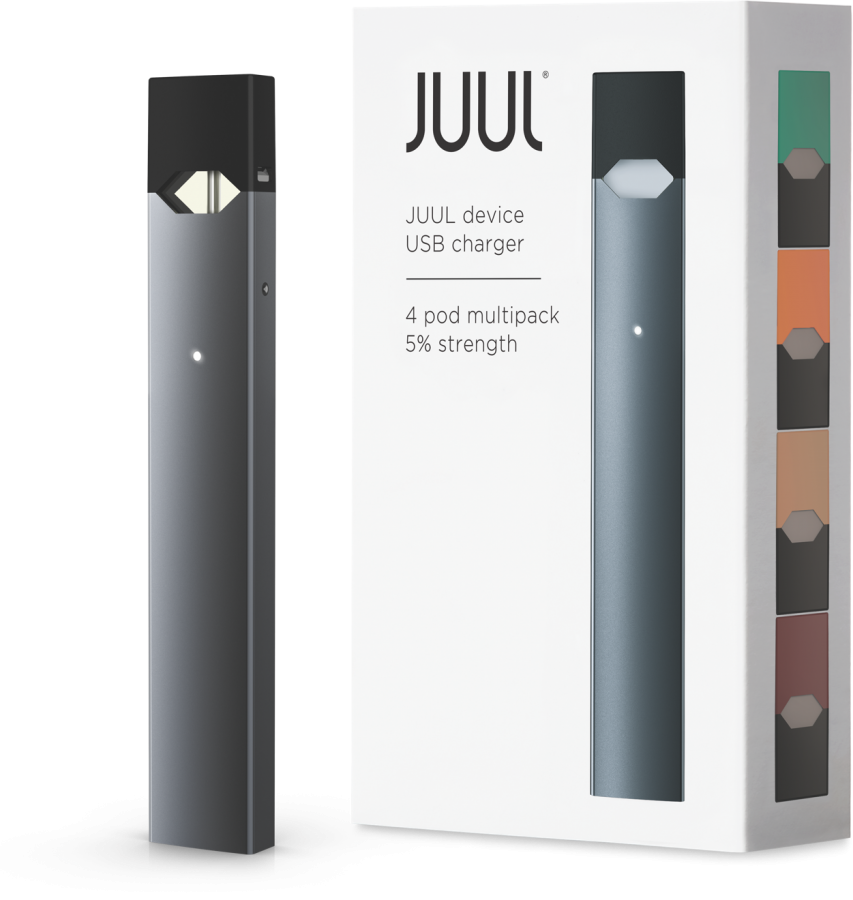
The Effects of Juuling by Jorge Villalobos

About two years ago, Juuling was introduced to the public. People thought it was an excellent technological device yet brought nothing but harm to the human body. Juuls are apparently one of many ways to help adults reduce their smoking but are being used by teens everywhere, from school grounds to the public. Even young teens are seen using these devices on social media, but if they only knew what damage they bring upon people’s lives. Teens believe it's cool and comfortable to utilize them; however, they aren’t cool at all. In the article “Juuls Pack Same Nicotine Punch as Cigarettes.” They state “These devices have what is called Juul pods containing nicotine equivalent to a pack of traditional cigarettes” ( Juuls Pack Same Nicotine Punch as Cigarettes 1) — informing the audience on the tremendous nicotine these JUULS contain. Believe it or not, juuls are used by millions and are now considered a social epidemic.
             This social epidemic is spreading like wildfire. In fact the company Juuls has now raised there age purchasing limit to twenty-one years of age due to thousands of young adults purchasing these devises in Juuls age verification page they announce “As of January 2019, we have implemented all of the online age verification enhancements we outlined in our plan to ensure no one under the age of 21 can buy any JUUL products on our website, regardless of flavor, while preventing bulk purchases to all customers.” (Updates To JUUL.com’s Online Age

Verification System 1). However, that still leaves millions of youth with these nicotine sticks. So many young adults from middle school to high school are using these horrific devices, in the article “Too many teens are using Juuls, according to the FDA” Weissman informs on the number of teens Juuling, “The FDA says more than 2 million middle and high schoolers regularly use these devices.” (Weissman 1). This is such a huge deal due to the fact that these teens that are being harmed are our country’s future.
             What lies ahead of this world is up to the minds of the younger generation, but Juuls are harming our world's future. Hurting in a way that little problems can turn into critical health issues. Shatrowsky explains to his readers that “Short-term side-effects of vaping include mouth dryness, dizziness, cough, dry eyes, increased airway resistance, chest pain, nosebleeds, vomiting, nausea, increased blood pressure, and increased heart rate. However, if the use of nicotine is sustained, its short-lived effects can develop into serious complications”(Shatrowsky 1). Nicotine is detrimental to health and even worse to such young minds that are still growing. The University of  New York ran some experiments on juuls explained by  “The negative effect of Juuling” an article of some test ran on experimental rats. “The growing popularity of Juuls and other vaping devices have struck a chord with the FDA, who are still in the process of approving them. An experiment conducted through New York University exposed rats to nicotine vapor for 12 weeks, mimicking the average teenager Juul usage. The exposure resulted in severe damage to their DNA, causing their cells to become unable to repair themselves. These effects drastically increase the risk of cancer and heart disease. Suddenly, researchers have panicked and are trying to reduce its underage usage.” Our country’s goal is to improvise and grow but let companies like Juul harm people mentally, physically, and economically.
   Image result for juuls
In the article “Teenagers Embrace JUUL, Saying It's Discreet Enough To Vape In Class” Angus Chen explains how easy it is to take a hit and put it away without anyone noticing  “Mil Schooley, an 18-year-old student in Denver says most of her friends have a JUUL — an e-cigarette that can vanish into a closed fist. When asked roughly how many, she stumbles a bit. "I wanna say like 50 or 60 percent? I don't know. Maybe it's just the people I know. All my friends in college have one," she says. "It just blew up over the summer." One reason JUUL and vape pens are so popular among teens currently might be that they can be used indoors without attracting unwanted attention or creating a stench, Morean says. On Twitter, teens post about their usage in school. The most brazen of them fire up their e-cigarettes while their teachers' backs are turned”(Chen 1). Showing not only how easy it is to use but also how widespread they are. In the quote Mil Schooley, an 18-year-old student in Denver says most of her friends have a JUUL — an e-cigarette that can vanish into a closed fist. When asked roughly how many, she stumbles a bit. "I wanna say like 50 or 60 percent? I don't know. Maybe it's just the people I know. All my friends in college have one," she says. "It just blew up over the summer." (Chen 1). She explains how fifty to sixty percent of her friend use these devices from one summer imagine how many will be using them over a more extended period. Juuls are so popular and common even nonsmoking adults know about them, bringing them to the attention they are now a worldwide epidemic, and they aren’t slowing down, but with the
 right help, we can put an end to this horrific outbreak. Juul Epidemic 
            Juuls are a globally known product that cause devastation to lives of users from young kids to adults. The Tabaco product is damaging to the human body rapidly little by little. People need to be aware of this social epidemic because of the various negative effects the nicotine stick brings upon the world today and tomorrow. Juuls should be banned and terminated in order to help the ones who have fallen a victim too. One way of helping is to push the creation of a law that either eliminates Juuls or implements stricter restrictions on these devices. As a community we can introduce a specific type of rehab to compensate for the harm they have brought upon users.
            According to The Truth Initiative, the epidemic came about around December of 2017 after about a 641% sales increase. The nicotine stick is sold primarily in gas stations in urban areas giving the youth an increased chance to get their hands on these harmful devices. The Truth Initiative also mentioned that the sales “likely reflect products obtained directly or indirectly by youth,” letting the public know that the sales “may be underestimated.” One of the most shocking statistics was when surveying over 1000 people 18 and older, 74 percent of them have obtained the product at a store, while 52% of the young adults got in the form of a gift from a friend or family member. It is mind boggling that people would gift what people nickname cancer sticks in an electric form to someone they claim to love and care for.
            The juul marketing campaigns are absolutely disgusting. In their earliest ads in 2015, they reveal teens dancing in large crowds with bright colors and happy faces, however it fails to include the detrimental effects caused by the destructive social product. Unfortunately the Tabaco Company is one of the largest industries in the world. According to The Tabaco Atlas, the Tabaco Company’s net worth is around a half a trillion dollars worldwide. Their net worth surpasses those of Coca-Cola, McDonalds, and Microsoft combined. The fact that this disturbingly successful industry has such a tremendous profit, means that lawsuits from people who turn out having major life-threatening health issues stand no chance in even putting a dent into the company’s fortress they have built. There have only been a few exceptions to this stigma. In 1984, the husband of deceased Rose Cipollone sued the Liggett Group because their lack of health risks labeled on the cigarette package. Because Mrs. Cipollone passed from lung cancer after 42 years of smoking, it was no question that she had died from the deadly effects of the cigarettes provided by The Liggett Group. Nowadays, every Tabaco product has a warning label in plain sight, usually in bold red letters. This is solely for legal reasons. These massive industries do not care about the well beings of their customers, their end goal is to make the most money and ensure that they cross al their “T’s” and dot their “I’s” along their destructive paths. Since this change in their packaging, they have made their lawsuits more solid than ever. The only loophole now, is if you are suffering from second-hand smoke and are having medical side effects. If there are no health issues prevalent, then there will be no lawsuit possible, therefore adding another layer of protection to this already impenetrable palace.
Image result for juuls
As mentioned previously, the most at risk users are sadly teens. This is because of the enormous following on twitter and Instagram where they post ads to the masses of young adults upon the social media sites. Twitter and Instagram have brought in most of their sales because of its popularity online it has become an epidemic disguised as a fad, to own one of these devious devices. Another one of their ever-so-successful marketing techniques is its unique flavor options such as crème-Brule, mint, mango, and even “Virginia Tabaco,” which to me makes me sick of what that would even taste like because thinking everyone can agree that it definitely doesn’t smell all that delicious.
As someone who has many friends that utilize this cigarette replacement, I don’t think they realize the danger they are putting themselves in. People forget that this still contains the worst part of cigarettes, nicotine. The juul company was genius in this design, they made it appear exactly opposite of what every cigarette does. It is sleek, updated, reusable, and electronically intriguing for an affordable price. In many ways my generation is the same that of the 70’s, where it was common to see underage individuals puffing on smoke and no one thinks twice about their damage. Only now, we know the effects because we’ve seen it before, but somehow people still turn a blind eye. This era is worse. We give too much freedom of exploration and choices without any consequences because we call it “living our life to the fullest,” or even worse, the infamous and cringe “YOLO.”
As an absurdist, Albert Camus I think is one of the people that would live by a “live your best life” type of life. He believes in finding the meaning in meaningless chaotic situations. Although agreed, with the idea that if they choose to do this disgusting thing to their body than it is their decision and it’s not hurting me any. However, Camus would have been cheering them on to be the most individual of a human they can be and if they want to smoke until their lungs die than right on, good for them. He would have been the friend that gave such a gift because of his opposing beliefs from mine and many others.
A specific rehab and removal of these products in areas where high school and middle school are located would be the most beneficial and successful way of getting them out of the hands of the notoriously impressionable youth. Also 18 Is too young of an age to be allowed to have such a product, although it doesn’t cause any mind altering states. It can cause life altering illnesses. If we raised the age to 21 much like the drinking age, then it’ll cut back on the fact that 16 year olds can easily get their hands on, what is basically a cigarette. There is never one obvious solution to problems of this capacity unless we as a community fought to abolish this products. Kids will always be kids and do the exact opposite of what they are told to do. But an effort is definitely way overdue. We can only hope that this trend is at its peak and people will begin to realize its effects sooner rather than later.


Works Cited.
Akhbari, Kourosh. “Who Can Sue Tobacco Companies.” LegalMatch Law Library, 24 July 2018, www.legalmatch.com/law-library/article/who-can-sue-tobacco-companies.html.
American Cancer Society. “Tobacco Industry Profits Estimated $35 Billion With Almost 6 Million Annual Deaths.” Maurer Foundation, 19 Sept. 2014, www.maurerfoundation.org/tobacco-industry-profits-estimated-35-billion-with-almost-6-million-annual-deaths/.
Brodwin, Erin. “$15 Billion Startup Juul Used 'Relaxation, Freedom, and Sex Appeal' to Market Its Creme-Brulee-Flavored e-Cigs on Twitter and Instagram - but Its Success Has Come at a Big Cost.” Business Insider, Business Insider, 26 Oct. 2018, www.businessinsider.com/juul-e-cig-marketing-youtube-twitter-instagram-social-media-advertising-study-2018-10.
“Growing.” Lifespan, www.lifespan.org/lifespan-living/juuling-what-it-and-what-you-should-know.
Juul and Youth:Rising Ecig Popularity.” Tabaco Free Kids, www.tobaccofreekids.org/assets/factsheets/0394.pdf.
“The Tobacco Cases.” The American Museum of Tort Law, 29 May 2018, www.tortmuseum.org/the-tobacco-cases/.
Truth Initiative. “How Much Nicotine Is in JUUL?” Truth Initiative, Truth Initiative, 26 Feb. 2019, truthinitiative.org/news/how-much-nicotine-juul.
Truth Initiative. “JUUL e-Cigarette Sales Increase More than 600% in One Year.” Truth Initiative, Truth Initiative, 16 Oct. 2018, truthinitiative.org/news/juul-sales-increase-more-600-year-underscoring-popularity-among-teens.
staff, Science X. “Juuls Pack Same Nicotine Punch as Cigarettes.” Medical Xpress – Medical
                 Research Advances and Health News, Medical Xpress, 11 Sept. 2018,      
                           medicalxpress.com/news/2018-09-juuls-nicotine-cigarettes.html.

| January 22, 2019, et al. “Updates To JUUL.com's Online Age Verification System.” JUUL
                Newsroom, newsroom.juul.com/2019/01/22/updates-to-juul-coms-online-age-
verification-system/.

Weissman, Cale Guthrie, and Cale Guthrie Weissman. “Too Many Teens Are Using Juuls,
                According to the FDA.” Fast Company, Fast Company, 12 Sept. 2018,    
                           www.fastcompany.com/90235756/too-many-teens-are-using-juuls-according-to-the-fda.

ShatrowskyChristine, Christine. “How JUULing Affects The Body.” Lune Magazine, 1 Sept.
              2018, www.lunemagazine.com/2018/08/21/how-juuling-affects-the-body/.
                           Shatrowsky
Binetti, Elizabeth. “The Negative Effects of Juuling.” Cardinal Chronicle,     
            westwoodcardinalchronicle.com/news/2018/03/16/the-negative-effects-of-juuling/.

Chen, Angus. “Teenagers Embrace JUUL, Saying It's Discreet Enough To Vape In Class.” NPR,  
                    NPR, 4 Dec. 2017, www.npr.org/sections/health-   
shots/2017/12/04/568273801/teenagers-embrace-juul-saying-its-discreet-enough-
        to-vape-in-class.

Tulsa Community College Spring 2026

Cruise Ship Crimes Madison Friday   https://madisonfridayyy.wixsite.com/final-exam Leila Ives     https://superfrankoceangir.wixsite.com...