Search This Blog

Monday, January 27, 2020

Homelessness Epidemic by Anonymous


Has your heart ever ached for someone as you’ve seen begging on the streets for food, work, or any other human necessity?  Homelessness can be defined as the state of an individual living with the lack of needed stability and security that is required to be able to operate in society. Have you ever thought what someone’s story might be about how they’ve ended up in their unfortunate circumstances? How could this have happened? What is he going to do for his next meal? Did this person just let him go? How can this be avoided for everyone? Homelessness can be the result of anything from mental health, unemployment, lack of financial security, any source of abuse, and a plethora of more causes. Unfortunately, this is a reality for very many in all different parts of the world and can possibly become one for others in the near future. What can we do as a human race to help put an end to this social epidemic?
Image result for homelessness
History
               Homelessness has been around for many years dating back from the Hellenistic period, from the era of Jesus Christ of Nazareth, Colonial times, and the period of The Great Depression. This epidemic is not just a current problem but has been a constant problem in civilization for many years just as it continues to be one. There are a few examples of homeless in early times such as when Alexander the Great meets and aspires to be as humble as Diogenes the Cynic, who just so happened to be a great homeless philosopher (Chugg,1). Another example derives from the Holy Bible in Mark 10:46-52, of the story of where Jesus Christ of Nazareth performed a miracle on a blind beggar named Bartimaeus that lived on the streets of the city (The Holy Bible IBC 1106).
             The times such as the Colonial Period, years 1607-1776, is where homelessness started to become more documented and clearly relevant to society (“History of Homelessness”, 1). Laws in this period were severe and many people were told if they were able to join the communities or if they had to move on and settle someplace else (1). This decision started to lead to people not being able to have a home since there were not really any other communities, they would have been able to join since there was not many other settlers.  Many cases belonged to when European settlers forced the Native Americans to move to other parts of their land which caused major fights and confusion that left many Europeans and Native Americans homeless (1). After the Civil War there were not enough jobs around so many people had to search for necessities such as food and clothes where the often-used terms such as bum, tramp, and hobo came from (2).  During The Great Depression, considered one of the most severe time periods in history, led to a dramatic increase in homelessness. With many people out of work, no money to go around, and still trying to survive and provide for families, there stood a problem that would still have affect in our society today.
Effects on Society
                    In California this epidemic is on a persistent rise especially now in the year 2019. There is a 12% rise of people without a home-stead home in Los Angeles County, with Los Angeles City seeing 16% and others such as Orange County 43%, Ventura County 28%, San Joaquin County 69%, and Alameda County 43%, saw an outrageous increase in homelessness (Tinoco, 1,2). The Los Angeles Homeless Services Authority (LAHSA) claims that between 2018 and 2019 an estimate of 55,000 people living in L.A. County are now homeless (1). 6% of Los Angeles County (estimate of 600,000) citizens live in households where most of their income,90%, goes to their housing (2).
        Can you imagine how these people must feel? Having much of their money go to housing and not being able to have much money for anything else like car notes, groceries, personal expenses, entertainment, and everything else that we all like to have money for. LAHSA also surveyed that many of their participants became homeless in a previous state and migrated to California (1). Even though it is a constant prejudgment on people that they are homeless since they are on drugs or mentally ill, an estimate of 71% of homeless people in Los Angeles County are neither substance abusers or mentally ill (3).
Examples of the Epidemic
                  The ideal generalization from people are always one of two things whenever they recognize a homeless person. Either the individual has some sort of substance abuse or they are a lazy bum who can not find a job. The two common assumptions are not the case for majority of people who are facing this social epidemic. The problem with these overviews is that many people are sometimes put into those circumstances due from the result of other’s actions towards them at a young age, unpreparedness for sudden changes, and several causes that could lead to anyone having a breakdown where he can not take any more nonsense in his life. According to Centrepoint Organization in the UK personal journeys from others provide some insight on these different causes (Centrepoint Organization UK, 2019):
       In Tori’s story from Centrepoint, she was hospitalized by her mother at just 15 years old when she beat Tori because she started having mental breakdowns (Centrepoint “Tori’s Story”, 1). From that point on she had to move in with her godmother where she was suddenly kicked out because she was not welcomed by her godmother’s partner because of her race (1). Being forced to have to fend for herself again at just 15 years old she was able to have a place to stay at Centrepoint accommodations where the she was sponsored by a woman named Veronica (1). Tori is now currently living independently where she has worked on several projects from being a blogger, to teaching as a dance teacher and doing a bit of photography and film making (1). Tori constantly creates new ways to raise money for Centrepoint so she can help give an opportunity for someone else who needs help fighting homelessness (1).
Image result for homelessness
One more example of different causes that can lead to someone being in this situation comes from Ben, who went to Centrepoint Organization after officially homeless on Christmas day according to Centrepoint (Centrepoint Organization UK, 2019):
     In Ben’s story when he was just 18, he moved inside of his girlfriend’s house after his relationship with his mother deteriorated (Centrepoint “Ben’s Story”,2019). After a sudden breakup he did not have any other place besides his mother house to go so from there things got worse (1). On Christmas day of that year Ben was hospitalized with sciatica where he was told that he could not return to his mother’s house, so he never went back (1). From that time on Ben slept on park benches, couch surfed, borrowed money for food, and freshened up at gyms (1). Ben was given the opportunity to have a room at Centrepoint which helped him tremendously and he is now living independently and working towards becoming an engineer (1).
      Stories such as Tori’s and Ben’s are two of many of how anyone can become homeless. This epidemic does not discriminate and can happen to people that are not prepared for it the most especially for young adults. According to Covenant House, more than two million kids in the United States will face some period of homelessness alone (Covenant House, 2019). This is a social issue that must be solved before the outcome is more than can be fixed. 
Solutions
               There are very few communities that are trying to find an actual solution of reducing and ending homelessness instead of just trying to maintain this epidemic. In the country of Finland there has been a dramatic decrease in homelessness due to their Housing First approach (Gray, 3). The argument by Finland was made that most homeless premises makes the individual try and solve their problems such as family issues, unemployment, abuse and health problems first before they can get receive the proper help that is needed (2). According to Finland, the outcome for a person who is housed first while their problem is taken care of while they are in better housing has better results than previous schemes because it helps takes a lot of stress off the individual (3). With the Housing First program tenants are given a normal lease for permanent housing and pay rent while still being able to receive housing benefits (3). These individuals are also given support around the clock that are personalized for their situations only (3). With the constant support they are able to receive financial advice about debt and how to manage their money more efficiently (3).
           A program such as Housing First also allows the amazing teamwork and participation of many others such as businesses, volunteers, and the country as a whole (3). Also Finland shows the studies of saving more money for the country with this program by saving up to 9,600 euros per person a year that would be used in government assisting programs (4). A solution like Housing First seems to be a good solution to homelessness because it helps bring the community together to end this social epidemic in Finland.
           One of the ways for homelessness to be solved is for the minimum wages being raised to a higher wage for people to be able to live (Shay,2). Of course, every state and country vary with minimum wages, but there needs to be an actual minimum living expense that can meet everyone’s minimum wage (2). There are also jobs that are not finance or cash handling positions that requires credit checks for employment (3). This practice is not helpful due to the fact that there may have been trouble with paying some bills or previous employment for a homeless person (3).
            There is still a good number of homeless people due to the contribution if development disorders and mental illness. This mostly takes place because these individuals aren’t given any special attention from friends or family which can help to someone becoming homeless (3).  One way we can help this stigma against this specific group of people is by gaining knowledge and teaching awareness about people having development disorders and mental illnesses (3). Healthcare as well plays a major part in the lives of homeless people, from the matter of medical bills being one of the top causes for bankruptcy (4). Many people do not have the requirements that are needed for government assistance or caring others that can help them in their time of need (4). There should be a law where it should be illegal for someone to lose their home because of not being able to work at that time (4). Also, healthcare being reshaped to a single payer system may help those who are hurt and trying to keep up with their medical bills (4).
          Personal views such as religion, sexuality, and various ideological opinions creates problems in relationships, such as parents and teens, which causes homelessness rapidly for teens (4). These certain situations can be classified simply as child abandonment and should have stricter laws (4). Abuse comes in many forms and for individuals to get away they have to sometimes experience homelessness. Knowledge and awareness about the different types of abuse can help give information about the various groups and programs that are designed to prevent, handle, and get away from the abuse (4).

Camus and Absurdity
              Albert Camus was an existentialist who believed that life had no meaning, and there was not anything you can do to obtain meaning in life (Maguire, 2015).  Camus would of have believed that homelessness was absurd. He would maybe of have believed that homeless individuals helped his theory of that life has no special meaning, because if it did then how could these persons not be self-sufficient when they had received a chance like everyone else. Albert Camus once said in his essay, The Minotaur or also known as The Stop in Oran, “In order to understand the world, one has to turn away from it on occasion”, (Camus, ‘The Minotaur’,1).  This simple quote can relay to the epidemic of homelessness since citizens who are independent mostly do look at homeless individuals as if they are outsiders in society. Homeless people may feel as no on in the world cares about their well being and stableness as people constantly passes by them in the street without even paying them any attention. Camus may of have made these individuals think if they were really the cause of their own downfall or everyone else like family, friends, capitalism and the government.
Conclusion
                 Homelessness is a social epidemic that we all should as a human race come together to help solve. The quality of life should be valued more to the point of where we want to help others in their time of need no matter their circumstances or situations. Whether they’ve come from previous abuse, disabilities, financial instability or just down on their luck, it is not humane just to watch others suffer. We will all be to benefit from helping the homeless get back on their feet, because more money will be able to go into public schools or reconstruction rather than trying to maintain homelessness with many government assisting programs. Homelessness can be solved but it will be a constant process that requires re-evaluation of attitudes with much love and support from others.


                                                           Works Cited
“Ben's Story.” Centrepoint, centrepoint.org.uk/youth-homelessness/real-stories/bens-story/. Web.
Camus, Albert. “The Minotaur.” Albert Camus: THE MINOTAUR, www.sccs.swarthmore.edu/users/00/pwillen1/lit/minot.htm.
Gray, Alex. “Here's How Finland Solved Its Homelessness Problem.” World Economic Forum, www.weforum.org/agenda/2018/02/how-finland-solved-homelessness/.
“History of Homelessness.” Invisible People, Web. 22 Sept. 2018, invisiblepeople.tv/history-of-homelessness/.
Maguire, Laura. "Camus and Absurdity." Philosophy Talk. Philosophy Talk, 28 Feb. 2015. Web. https://www.philosophytalk.org/blog/camus-and-absurdity
Shay, Kylyssa. “Solutions to the Problem of Homelessness.” Soapboxie, 26 Aug. 2016, soapboxie.com/social-issues/homelessness solutions.
“Statistics on Homeless Youth in America: Covenant House.” Statistics on Homeless Youth in America | Covenant House, Web. 2018, www.covenanthouse.org/homeless-teen-issues/statistics.
The Holy Bible: Containing the Old and New Testaments. Trinitarian Bible Society, 2010.
Tinoco, Matt. “LA County Homelessness Is Getting Worse. Here Are the Numbers.” Web. LAist, 2019, laist.com/2019/06/04/los_angeles_homeless_rate_increase.php.
 “Tori's Story.” Centrepoint, centrepoint.org.uk/youth-homelessness/real-stories/tori’s-story/. Web.

Heroin, a Social Epidemic by Moore


Image result for heroin


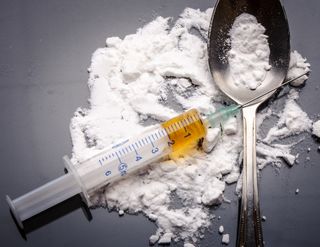
Imagine living a life where you can escape any time you want. You just take a little bump and get that unexplained pleasurable sensation within seconds. That warm fuzzy feeling where your body goes numb, you don’t have to feel or worry about life, you feel limitless with your thoughts, it’s a sensation that takes over every aspect of your mind and body. Now, imagine that feeling followed by severe nausea, vomiting, the most absurd intense sensation to itch your entire body. This is the feeling that 948,000 Americans have felt (“Substance Abuse Center for Behavioral Health Statistics and Quality”). This is what Heroin is said to feel like. A drug that was originally prescribed to patients to help with addiction to morphine is now the number one drug overdose killer in the U.S. With numbers skyrocketing like never before, heroin is and has been a social epidemic since the early ’90s, but why? Why has it not been taken control of and what is the best approach to do so?
This heroin epidemic starts well before 1898, but during this time it became commercialized. A German drug company, Bayer, released heroin to their pharmaceutical company as a non-addictive drug to help with the addictive-ness of morphine. They coined the drug’s name based on the German word “heroisch” meaning “heroic, strong” (Edwards). As people began to realize that heroin was addictive, it was too late. More than six closely related drugs were produced and being sold to satisfy the massive need for heroin, such as hydromorphone and dihydromorphine. During this time, diamorphine (another name for heroin) was being prescribed as a cough suppressant "In the cough of phthisis minute doses [of morphine] are of service, but in this particular disease morphine is frequently better replaced by codeine or by heroin, which checks irritable coughs without the narcotism following upon the administration of morphine” (Recreational Drug - an Overview | ScienceDirect Topics). It wasn’t until 1924 when the health committee decided to ban heroin, and all related drugs because it was found there were no therapeutic advantages over drugs already being used (Heroin, Drugs / Substance Abuse).
Over the years, many people have been told endless amounts of horror stories behind using heroin but don’t understand exactly what it is, where it’s made or how it’s made. For starters, heroin is made from morphine, which is a natural substance taken from the seed pods of poppy seed plants. These plants can grow all around the world, a majority are grown in warmer climates such as Southeast and Southwest Asia, Mexico and Colombia. The first step is to remove the sap from the pod and purify it to make a base of Morphine. Then, the base is mixed, boiled and separated numerous times using a vast array of chemicals. Some of these chemicals alone can be harmful to a person’s body if cross-contaminated with the wrong chemical it can cause major explosions. 
Like many other pharmaceutical drugs, heroin is made in a lab by professional chemists and sometimes not-so-professional chemists. Black market heroin is a huge risk because many times drug dealers cut the other ingredients in with heroin to make a bigger profit on a smaller amount. For example, Fentanyl is often used as an additive. Fentanyl is a man-made drug with a 50% higher potency than heroin (Synthetic Opioid Overdose Data | Drug Overdose | Injury Center). It has the same consistency as heroin and has no smell. Unknowingly snorting this can lead to a dangerous overdose. 
Heroin usage has a massive effect on the world with problems such as homelessness, unemployment HIV, and hepatitis B and C. In March of 2017, The National Institute of Drug Abuse did a study in the US to see where the highest use and the death highest rates of heroin users were. “West Virginia came in first place with a count of 49 opioid-involved overdoses per 100,000 persons”. In 2017 West Virginia had a total of “833 deaths involving opioid overdoses”, in 2009 this number was only at 150” (West Virginia Opioid Summary).
 Another worldwide problem involving heroin use is the risk of contracting HIV/AIDS and hepatitis viruses. Both of these viruses are spread through either blood and/or other body fluids. Because heroin is a mind-altering drug, a person in this state of mind has a much higher risk of contracting HIV. From being careless as to where needles come from to not being in a conscious state of mind knowing whether or not it is ok to have unprotected sex with your partner. This is true for both men and women. According to the National Institute of Drug Use, “one in 10 HIV diagnoses occur among people who inject drugs” (Drug Use and Viral Infections (HIV, Hepatitis). As unfortunate as it is, women who contract HIV can pass it to their baby during childbirth and after through breast milk.  
Heroin use is usually talked about on a big scale, but it can lead to several problems for small communities and neighborhoods. Communities that have high heroin and/or drug use start to have a domino effect within that community. Heroin and drug use within communities and neighborhoods normally have a higher crime rate and more violence. In turn, this leads to many families not wanting to move into the said community because who wants to raise kids where people are selling heroin down the street. With this, businesses start to feel the effects. Not making enough money to make ends meet or having been robbed numerous times and being forced to move in fear of their safety. 
Communities and neighborhoods that have a higher crime rate often have a higher homelessness rate. Again, who wants to raise a child with a homeless person sleeping down the street from you? Heroin users need to get their fix by any means necessary. Stealing from family, not paying rent, and not eating becomes a normal lifestyle for many heroin users. Being in the constant state of this mind-altering drug helps a person not feel the pain that comes with the lives they are ruining or people they hurt along the way. It becomes a mechanism to cope with the wrongdoings of their lives.
Image result for heroin
Lives of Substance is an organization that has two main goals: first to support people who have/ had addiction problem second is to inform the public about addiction with personal stories from people with addiction. They do many interviews with people during their drug use days. Josie, who was 38, at the time talks about her heroin use:
I didn’t like the group home and at that stage, I didn’t know anywhere else to go […Being homeless] was so new to me, you know. You’d grab a blanket and a pillow and just crash underneath a tree [and] you’d just [take speed] anywhere.…
my first taste of heroin, it was like this peace coming through your body [from] head to toe. […] It’s peaceful and another getaway, and [I was] able to sleep. Like [it helped me] block out my thoughts and […] deal with every abuse at home. And so, for me, that just made things easier.
Josie says she found it hard to cope as a single mother with little support. After the baby was born, she resumed taking heroin. When her child was about two, she had a second child who also born prematurely but did not survive. During the pregnancy, Josie had stopped taking heroin but when she lost her second child, she says ‘everything […] came crashing down’ and she resumed taking it. A few years later, she had another child. (Lives of Substances)
To this day, Josie still uses heroin with no end in sight.
With the technology and resources today, we should be way ahead of an epidemic like this, but unfortunately, we are still way behind. German Lopez says it best “the primary problem with opioid addiction is simple: it’s easier to get high than it is to get help” (Lopez). Everyone seems to have a solution for epidemics like this but only few seem to put it into action. One country has come up with a solution and is in the process of testing it out. Canada has had a national program of legalized medical cannabis since 2014, and it might be a way to help the opioid addiction.
According to an article by The Conversation, “Drug overdoses are the leading cause of deaths and still twenty million prescriptions are filled each year in Canada.” “Almost one in five Canadians live with chronic pain”. (Milloy). In 2014 researchers from across the United States and Canada concluded their data over a 10-year study. They found the states that legalized medical cannabis had twenty-five percent fewer opioid related deaths (Milloy). It may not fix the heroin/opioid epidemic but it might offset it.  
           The US is also making attempts to solve this epidemic, using big and small-scale resources, “The Trump Administration had secured $6 billion in new funding over a two-year window to fight opioid abuse. In October 2017, President Trump declared the opioid crisis a public health emergency and devised a three-part plan to tackling this:
Part 1 is reducing demand and over-prescription, including educating Americans about the dangers of opioid misuse. Part 2 is cutting down on the supply of illicit drugs by cracking down on the international and domestic drug supply chains that devastate American communities. Part 3 is helping those struggling with addiction through evidence-based treatment and recovery support services.     (“The White House”)
             The Federal Government is improving access to addiction treatment and recovery services across all fifty states. States are enhancing the use of prescription guidelines based on the best available science. Health care providers are using state-based PDMP’s (perception monitoring programs) which help identify patients at risk of addiction or overdose and the safest thing you can do as an individual is consider non opioid options for pain management (“Opioid Prescribing”).
Albert Camus believed the world should be without restrictions. He believed there was no reason for epidemics because there shouldn’t be order, rules or guide lines to live by. Life is meaningless and you should embrace the meaninglessness. Albert Camus was an atheist and an anarchist. He believed you shouldn’t live your life serving any one person and there is room to be rebellious. Albert Camus would be empathetic towards the vast amount of people who lost their lives dew to opioid overdose. He would have been saddened by the time it takes away from living life and enjoying life. On the other hand, he would want all drugs to be legal and embrace the freedom that comes with being able to do heroin without going jail for it. This may sound strange, but there shouldn’t be a reason for something to be illegal; you should have the freedom to do what you please. Therefore, there should be an epidemic about it.
            People are dying and suffering from something that was originally created and falsely advertised by doctors. Heroin has been and still is the number one overdose killer in the U.S. Why, if it’s killed so many people and has had such a detrimental effect on people’s lives, are we still having to deal with it today? Why is it still being made in labs and prescribed to patients? Why have we put forth so much money and still haven’t come to a solution? Is it absurd to have a heroin epidemic in 2018?


Works Cited
CDC. “Opioid Prescribing.” Centers for Disease Control and Prevention, 26 Sept. 2017.
“Consumption in Everyday Life.” Lives of Substance, Curtin University’s National Drug Research Institute, 2016.
"Drug Use and Viral Infections (HIV, Hepatitis)." National Institute on Drug Abuse, 29 Jul. 2019.
Edwards, Jim. “Yes, Bayer Promoted Heroin for Children -- Here Are the Ads That Prove It.” Business Insider, Business Insider, 17 Nov. 2011.
 “Heroin (Drugs / Substance Abuse).” UrbanAreas.net
Lopez, German. “How to Stop the Deadliest Drug Overdose Crisis in American History.” Vox, Vox, Aug. 2017
M-J Milloy, and Stephanie Lake. “Now That Cannabis Is Legal, Let’s Use It to Tackle the Opioid Crisis.” The Conversation, 16 Oct. 2018.
National Institute on Drug Abuse. “West Virginia Opioid Summary.” NIDA, 29 Mar. 2019.
Recreational Drug - an Overview | ScienceDirect Topics”, Recreational Drug. Elsevier B.V, 2019.
“Results from the 2016 National Survey on Drug Use and Health: Detailed Tables”. Substance Abuse Center for Behavioral Health Statistics and Quality. SAMHSA. Published September 7, 2017.
“Synthetic Opioid Overdose Data | Drug Overdose | (CDC) Injury Center.” Centers for Disease Control and Prevention, Centers for Disease Control and Prevention, 14 Aug. 2019.
“The White House.” The White House, The White House, 2017, www.whitehouse.gov/opioids/.


When You Can Control How Life Ends by Erin Pantalone


It’s Monday morning; your alarm is going of for the third time as you roll over and again hit snooze. The thought of getting out of bed consumes you with dread. Laying there you begin to cry as the anxiety overtakes you. Five more minutes pass, your alarm goes off again; this time you know it’s the final alarm and you must get up. You still find yourself panicking about having to face reality. It’s Monday you have kids to get ready for school, a job to report to, daily life functions that need to be handled. Despite all of that all you can do is lie in your bed and wonder if the world really needs you. Your next thought, reviewing your plan to put an end to your suffering because you’ve convinced yourself time and time again that everyone is better off without you.
            Suicide, the act or an instance of taking one's own life voluntarily and intentionally (“Definition of Suicide” 1). This is an epidemic that claims tens of thousands of lives a year.  According to the Center for Disease Control, in 2017 suicide was the tenth leading cause of death in the United States (“NIHM” 1). We live in a social media fueled society. Every day we read about another shooting, stabbing, or event that has led to another fatality, yet we do not seem to bat an eye. This has become the standard for our world these days. Homicides that we have become so accustom to hearing about, account for less deaths every year than suicide. Suicide is an epidemic that can be eradicated. We may not eliminate the issue as we would like but the number of deaths can be greatly decreased. The question is where do we start?
Suicide is not a modern-day epidemic. In fact it can be traced back to the biblical and ancient times. In ancient Greece suicide was not frowned upon so long as it was for justifiable reasons. Hardships, when it was “legally ordered by the State” (as in the case of Socrates) (“Nagel”1) and illness were all acceptable reasons for suicide. In the instance of Socrates; he was ordered to drink a fatal concoction after he was found guilty of not believing in the Gods and corrupting the youth of Ancient Greece. In the case of the Ancient Romans, suicide was permisable for all those except slaves and soldiers (“Nagel”1). Looking at suicide from a biblical standpoint, according to Thomas Nagel, in his piece “A Brief History of Suicide”, there are eleven instances in the bible where suicide is mentioned. Again, like the Greeks and Romans it did not appear in the bible that suicide was condemned. So, when did suicide become something that was no longer acceptable?
When you look at the middle ages this is where things appear to change in more ways than one. During these times, when a person was to commit suicide the persons body was drug, tortured, hung or staked through the chest (“Nagel”1) The middle ages may also be when suicide was first seen as a mental disorder. As we progress through the times especially into the Renaissance ages suicide is regarded more and more as an immoral act.  19th Century England “non compos mentis” was coined by coroners for suicide victijms(“Nagel”1). The term “non compos mentis”, translated basically means not of sound mind. They felt the victims where not of sound mind at the moment of suicide.
Transition into the current times, suicide is still more or less socially unacceptable in most regions. There are places in the middle east that for religious purposes i.e.; suicide bombings, that it is an act that is embraced. Currently there are ten countries where physician assisted suicide is legal, but for the topic of this paper we are focusing on self-inflicted suicides. 
What exactly causes one to have suicidal thoughts and behaviors? Research has found that 46% of people who die by suicide had a known mental health condition ("Risk of Suicide” 1). Mental health issues may be one of the biggest factors in why someone carries out their death but there are other factors to consider as well. Some think there may be a family history or genetic link to suicide. Chronic illness is also another factor that plays into the possibility of why someone commits suicide. Other key factors can be abuse and trauma.

I’ve decided now is the time. I have meticulously planned out each step to ending my life. I replay the scenario repeatedly; making sure I haven’t missed a step; ensuring that my plan will be successful. My letter of apologies and regret has been penned, I have driven to an isolated location, I am ready to follow through. Why I am I hesitating? Everyone is better off without me I’m more of a burden than an asset or so I have thought. Surely my death will make things easier for everyone I love, won’t it?’
When an individual follows through on their suicide it leaves a wake of destruction for those left behind. Family and friends are left reeling with the effects. Those closest to you are going to feel an array of emotions; anger, pain, sorrow, guilt, and grief to name a few. The grief and the after math for those you have left here are not short lived. Some will spend years still processing and sorting through the emotions. Always wondering what if they had said or done something different, would you still be here?
What if you had been a prominent member of your community? Those members of your community would too be wondering and grieving. Although suicide seems like the perfect answer to solve your issues all it truly does is end your suffering. The aftermath it leaves for everyone else is something most people do not ever take into consideration before following through on their plan.

As it was mentioned earlier, suicide dates to ancient times. Tens of thousands of people a year, even extremely prominent and historical figures have carried out their suicides. One of the most notable suicides from the ancient times other than Socrates whom was discussed earlier is Cleopatra. Cleopatra attempted to seduce and win over Octavian after her empire was defeated by the Romans but was unsuccessful. “Rather than fall under Octavian’s domination, Cleopatra died by suicide on August 12, 30 B.C., possibly by means of an asp, a poisonous Egyptian serpent and symbol of divine royalty” ("Cleopatra Dies by Suicide"). Another notable suicide in history is that of Adolf Hitler. In April of 1943, Hitler who was hiding in a bunker committed suicide. He swallowed cyanide capsule and shooting himself in the head ("Adolf Hitler Commits Suicide in His Underground Bunker").
The numbers associated with this epidemic are shocking. In 2016 suicide was the 10th-leading cause of death (“Weinerman”1). As if that isn’t alarming enough, according to the same article, suicide was the second-leading cause of death among people ages 10 to 34 that same year. The rate at which the statistics continue to grow is frightening. Suicide has increased by about 1 percent per year from 2000 through 2006 and by about 2 percent per year from 2006 through 2016 (“Weinerman” 1).
            What are the odds that suicide would strike the same family more than once? Statistically that can’t be answered, at least not yet. From a personal standpoint, I can verify it can happen more than once. My family has experienced this tragedy twice. In January of 2010 my cousin was finally successful in taking her own life. She was a young, vibrant woman who in her early twenties started experiencing mental health issues. By the time of her death she had been diagnosed with bipolar and schizophrenia. She had two previous attempts to take her life that had been unsuccessful resulting in psychiatric hospital stays. When she was finally successful it rocked my family to the core. Fast forward nine years and tragedy strikes again. October of 2018 my mother after many failed attempts was able to succeed. As with my cousin my mother also had been battling mental health issues. In her circumstance though it had been most of her life she dealt with it. I can remember her first attempt when I was still in High School. Over the next 17 years, there were five other attempts that someone was able to intervene on at just the right moment. Having to experience the tragedy of suicide once is unpleasant enough, twice is absolutely horrific; especially when it is your mother. Statistically since so many suicides and suicide attempts are linked to mental health and possibly genetics, how do we stop this epidemic?      
          Over the span of the last eighteen years, suicide rates have been a roller coaster, they rise and then they fall, only to climb again. According to the CDC, between 1999 and 2017, the rate increased 33%, (“Hedegaard”1) despite all of the fluctuation and studies there still doesn’t seem to be any real cure in sight. Since suicide and suicide attempts are carried out in a variety of different ways, how do we put an end to it? The most obvious choice would be to address the issue that seems to be a common denominator in all the victims of the epidemic, and that is mental health. According to a research article on NCBI, Psychological autopsies from the middle of the previous century revealed that most people who have died by suicide have suffered from mental disorders. 90% of those who committed suicide had a psychiatric diagnosis at the time of death.
             
In the image above, you can see that the top three disorders associated with suicide have been either a mood disorder, schizophrenia and substance abuse. Treating these issues will help cut down on the amount of suicides. Since suicide is so complex being that it involves not only psychological issues, but biological, cultural and environmental issues as well when you link it to substance abuse, it is going to require a variety of treatment. When looking at issues such as mood disorders in regard to suicide, a treatment such as Cognitive Behavioral Therapy (CBT) is an evidence-based method for reducing suicide attempt rates and improving adherence to treatment. This treatment has been shown to be effective when directly focused on reducing aspects of suicidal behavior (“Bradvik”1). Another approach to treating mood disorders would be a pharmacological treatment. Lithium is reported to reduce both attempted and completed suicides in major mood disorders, such as unipolar depression and bipolar patients with long-term lithium treatment (“Bradvik”1). Extended use of lithium may reduce the number of suicidal actions, but it is also a cause for concern that a patient could use it to overdose. It is vital that physicians monitor patient and educate them to ensure proper treatment is followed. Treating schizophrenia with an antipsychotic like Cloazpine has shown to reduce the amount of suicide attempts in patients. It is also the only FDA approved drug for treatment of suicidal behavior (“Bradvik”1). Treating your substance abuse patient, and even the substance abuse patient who also suffers from a mood/ personality disorder can be treated in a multitude of ways. There are including inpatient programs, prevention programs, and self-help programs such as Alcoholics Anonymous which have a degree of effectiveness. You also have pharmacological approaches too. The drugs that can be used are quiet extensive and target different issues the patient may be suffering. Addressing and treating the most obvious underlying issues like the ones discussed above for a suicidal patient is the best strategy to drastically cutting down on the amount of deaths each year.


                Albert Camus appeared to have strong feelings about suicide. It seems as though he could not quiet grasp what is was that would make someone decide that death by their own hands was an answer to the problems in their lives. In “The Myth of Sisyphus”, Camas said,There is but one truly serious philosophical problem, and that is suicide. Judging whether life is or is not worth living amounts to answering the fundamental question of philosophy. All the rest — whether or not the world has three dimensions, whether the mind has nine or twelve categories — comes afterwards”.  I believe Camus would continue to ponder whether the absurd events in people’s lives really dictated a need to end their lives. I feel like he would think the number of deaths every year related to suicides itself would be absurd.

            It’s eleven o’clock in the evening and you see the screen on your phone light up, you see your sisters picture illuminate the face of the phone, your heart sinks immediately because you know she never calls this late on a week night unless it is important. You answer it and without ever exchanging a word you hear the devastating sobs and screams, in that instance you know your mother is gone. Suicide is a horrific epidemic that sadly every year continues to grow. The worst part about this issue is there is not just one cause for it, there is a multitude of issues that lead to a person choosing to end their life. How do you stop such an epidemic when there are so many causes? You start with addressing the main issues that seem to lead to suicide. When studies show that a majority of suicide victims suffered from a mental disorder, you address those mental health and substance abuse issues. You focus on what you can fix in the here and now. We still do not know whether this is truly a genetics issue, a misfire in the brain, a fault in your genetic strand somewhere but what we do know is mental health comes up repeatedly. The sad thing about this epidemic unlike so many others, is it leaves your loved ones behind struggling to figure out why and how. Why did you do this? How could they have stopped this? When you have experienced a loss like this not once, or even twice but three times by someone you have loved you continually wonder what if. There will always be what ifs, but there will always be indicators to a person’s condition as well. You can never stop fighting for those who have had suicidal tendencies that screamed “look at me” or “I need help” the minute you stop fighting and you think they are ok is the moment you lose them. I know there are hundreds of epidemics but when you have experienced the same one three times you realize there isn’t another one that compares. So many epidemics of our past have been irradiated simply by vaccines, and issue like suicide unfortunately does not have a cure as simple as that. I thoroughly believe even with mental health care and substance abuse treatment that we will ever be able to eradicate the problem but we can definitely put a drastic drop in the numbers.
  
Works Cited
BrĂ„dvik, Louise. "Suicide Risk and Mental Disorders." PubMed Central (PMC), 15 Sept. 2018, www.ncbi.nlm.nih.gov/pmc/articles/PMC6165520/. Accessed 14 Oct. 2019.
Camus, Albert. The Myth of Sisyphus And Other Essays. Wordpress, 2012, postarchive.files.wordpress.com/2015/03/myth-of-sisyphus-and-other-essays-the-albert-camus.pdf. Accessed 1 Nov. 2019.
"Cleopatra Dies by Suicide." HISTORY, 9 Feb. 2010, www.history.com/this-day-in-history/cleopatra-commits-suicide. Accessed 11 Oct. 2019.
"Definition of SUICIDE." Dictionary by Merriam-Webster, www.merriam-webster.com/dictionary/suicide. Accessed 27 Sept. 2019
Hedegaard, Holly, et al. "Suicide Mortality in the United States 1999-2017." Centers for Disease Control and Prevention, NCHS, Nov. 2018, www.cdc.gov/nchs/data/databriefs/db330-h.pdf. Accessed 18 Oct. 2019.
"National Institute of Mental Health - Suicide." NIMH, Apr. 2019, www.nimh.nih.gov/health/statistics/suicide.shtml. Accessed 26 Sept. 2019.
Nagel, Thomas. "A BRIEF HISTORY OF SUICIDE." Soars, www.soars.org.uk/index.php/about/2014-06-06-18-57-53. Accessed 8 Oct. 2019.

"Risk of Suicide." NAMI: National Alliance on Mental Illness, www.nami.org/Learn-More/Mental-Health-Conditions/Related-Conditions/Suicide. Accessed 9 Oct. 2019.

Winerman, Lea. "By the Numbers: An Alarming Rise in Suicide." Https://www.apa.org, www.apa.org/monitor/2019/01/numbers. Accessed 9 Oct. 2019.


Bullying by Amy Hartzog


Bullying is a worldwide issue; there are many different types of bullying that happen everywhere. My boyfriend's little brother has a bit of autism in him. It is his first year in high school, and he hates it because all the kids are cruel and like to push him around. This causes him depression, anxiety, sadness, loneliness, etc. Kids nowadays don’t think about what others go through every single day. Nobody can just look at someone and just know his whole life story. This worldwide issue is a solvable situation and is a topic everyone needs to focus on.
The history of bullying has evolved over the years. the cause of this is the people and how evil this world is. Social media has made it easier for others to attack one another, over the years... There are many different types of bullying, and the social effects it has on others are anti-social effects such as avoiding school and people and causing self-harm. When people talk about being bullied, usually what pops up in everyone's brain is being physically bullied, but there are about four different types of bullying as in verbal, physical, relational and cyberbullying. This affects all youths, the attackers, victims and even the ones watching.
Verbal bullying can carry enormous weight, meaning name-calling, or disrespectful comments made. Words go a very long way in this generation. Girls are more likely to use this type of bullying; this type of bullying seems to affect their image to others which leads to low self-esteem and depression. Words contain much power behind every word that is spoken. This leads to missing school and falling behind in classes just to avoid conflict.
Physical bullying is one of the more serious types, meaning continuous hitting, unwanted pushing, tripping, spitting, and even damaging possessions of others. Boys are more likely to participate in this type of bullying. People who usually receive this type of treatment start to follow that path of turning into a bully and will start being more aggressive or might turn to suicide or other harmful items.
Relational bullying is very common in all ages, which is leaving someone out of the activities just because they are different or not good enough to be in the group. Just treating someone like they are invisible and making them feel unwanted usually happens usually between friend groups and is a little quieter than the other types of bullying, which is because the gossiping, information, and stories are being spread around the circle of friends.
Cyberbullying is the most common and easiest one everyone uses. This happens all over social media, Facebook, Instagram, Twitter, text, and even Snapchat. The victims usually get attacked by the pictures they post or the comments they make for everyone to see. Cyberbullying is always made up of fake lies and information just to make someone else look bad. The victim doesn’t know who is bullying them all the time, even with the fake accounts that are made or the fake identities the bully hide behind.  It is easier to bully using social media because most people won't say it to your face. They like to hide behind a screen and are ruthless from the comments they make.
Bullying has a big impact on society. Children take their lives every day and it affects many people. A little town in Kentucky a 10-year-old boy that was born with a birth defect killed himself because the children were picking on him. “There were three suicides in 2017-18 among students in Jefferson County Public Schools, which has more than 95,000 kindergartens through 12th graders” according to Renee Murphy the spokeswoman (Li 1). This affects the little town with the number of suicides happening in the area. This is very stressful and has a lot of people worried about their own child's life.
My family had experience with bullying. My cousin was never the most popular, and all the kids would isolate him from all the activities. One day the same group of boys were picking on him because of his weight. He spoke up for himself, but the bullies would always find out and start pushing him around. One day they followed my cousin home from school, and he hid from them in his neighbor's garage. The man told the three young boys to get lost before he called the police. My cousin suddenly stopped telling everyone that he was getting picked on. The bullying continued, and the three boys the next day went to my cousin's neighbor's house and wrecked his car. The boys went to jail and stopped bullying my cousin. It is sad how someone can speak up about what is happening, but nothing can be done to prevent that at the time.
There was a survey taken back in 2016; (Stringer 1). 80,000 students around the world replied to a survey about what other kids bully them about. Some of the top percentages were on how the student look, 44% of students (1). get bullied from this situation, which is ridiculous because nobody is in control on how they are born. God made everyone beautiful, but kids just don’t understand that nowadays. Another high percentage was 16% of students (1). voted that they are getting bullied because of their race, which is the society's fault for having such hatred for another human being and teaching our children that its expectable to treat someone like that. Nearly 14% of the students (1.) voted that they get bullied solely because of their sexual preference weather its homosexual, heterosexual or pansexual. Love has no boundaries and shouldn't be made fun of. Last high percentage is 12% of students (1). voted that they get bullied because of their parent's income. Reading this is absurd since you never know the reasons or challenges of them being less fortunate. So, it is never funny for someone to pick on someone with that issue. Teachers need the be more aware about this issue because sometimes they don’t even know what their students are going through, “I think that the school should be more controlling on cyber-bullying. They are not aware that their students are being bullied or harassed on social media.” (1).

The less percentages were on how students get bullied from their religion, 9% voted (Stringer 1). Once again there are students all around the world who were brought up with different beliefs and traditions, our school systems have become very diverse in today's time. Another 9% of students (1). are getting bullied from where they came from. Seeing how other students are fleeing from their countries that are in war and poverty to seek better life doesn’t seem right. 8% of students (1). are getting bullied by gender, which is insane, but we been dealing with gender differences for a long time now. Then 7% of students (1.) get bullied by the disabilities they have; nobody should ever say anything to anyone about a disability because it is wrong and cruel. Most people are born with a disability and can't help that. “The data showed administrators that there was a disparity between how they and the students defined bullying. Students reported being verbally harassed in person and online, while some adults assumed that if bullying occurred, it would look like physical aggression” (Stringer 1). Always be kind to others, the world is full of enough hate.
There is not just one single solution out there to prevent bullying, but the main one is everyone always needs to tell an adult or a higher authority. People need to make everyone aware, so maybe someone will stand up and help with the situation. The bully needs to be punished because this might be the only way they realize when it starts affecting them. Bullying is not taken seriously nowadays because it happens every day, and most people take it out of context. “On the heels of a recent story about a 1-year old Georgia girl who was granted complimentary plastic surgery from a foundation to help ward off school bullies, the topic has sparked notable controversy and debate” (Hamilton 1). This solution has any different arguments about it, first kids are more likely to get bullied just by the way they look, so changing how you look when that is how God made you is not a solution to make. But some people take this into consideration because it does stop the bullies most of the time.
One solution to stop the mean comments and the constant torture these kids put up with every day is to simply take it into your own hands. These solutions to stopping the bully doesn’t always work. It does start by getting the bully thinking, as in the kid will get the hint to back off and to stay away. As in, taking new routes, staying near an adult, or even telling someone who could help. There are many people in the world that can't stand the fact that people are being bullying, most of them have been in that situation before. So, a lot of people will stand up and make a change. This would work because usually if someone bigger stands up for you the bully gets scared. A bully never likes to be called out or have people against them.
There are billions of people in the world and if you think about it every single person is a bully. Everyone talks bad about someone; everyone says hateful words to one another. So, really everyone is a bully just others take it by being physical. There really is no way to stop what someone says or what they do. This world is an evil place, everyone needs to learn how to stick up for themselves and if that doesn’t work, find someone who cares and that will help you.
Sadly, bullying is not illegal, so no legal actions can be taken to prevent the situation happening, so that is why it is very frequent. “In particular, when a youth dies by suicide, it is misleading to cover the story as a crime. Rather, consider covering it as a public health issue” (Facts about bullying). This shows how our world really hides the truth because they don't want to put the work in to helping the society. But when someone starts to harass someone else, it does break a federal law, and the bully can be sent to jail. This is why the solution to bullying doesn't work in our world is because nothing can truly prevent or get the bully away from the victim.
Bullying can happen anywhere and at any time. School is like a second home and a place where children are supposed to learn and grow into the person they will be in the future. When bulling is taken into the school the child will no longer be focused on what is important. Bullying is very important because this happens all over the world, in all ages. Bullying usually attacks people who look different, have disabilities, or even what they like. Just because someone is different and wasn't born perfect. That gives no reason for anyone to bully them.


Work Cited.
 Lehnardt, Karen. “56 intresting bullying facts.” Fact Retiever, 2016,
www.factretiever.com/bullying-facts. Accessed 20 Oct. 2019.
 Li, David K. “10-year-old-Kentucky boy who killed himself was bullied, mother says.” US News, 2019, www.nbcnews.com/news/us-news/10-year-old-kentucky-boy-who-committed-suicide-was-bullied-n961936. Accessed 20 Oct. 2019.
“Facts about bullying.” Stop bullying.gov
 Stringer, Kate. “80,000 Kids Just Replied to a Survey About Bullying. Here’s What Surprised Their Educators Most.” The 74, 2016, www.the74million.org/article/80000-kids-just-replied-to-a-survey-about-bullying-heres-what-surprised-their-educators-most/

 Kristen,Hamilton. “Teen Bullying Survey Shows 68 Percent Would Give Their Child Plastic Surgery to Prevent Harassment.”


Tulsa Community College Spring 2026

Cruise Ship Crimes Madison Friday   https://madisonfridayyy.wixsite.com/final-exam Leila Ives     https://superfrankoceangir.wixsite.com...